How to Take a Herbal Tincture: Dilution, Timing and Storage
Table of Contents
You have bought your first herbal tincture, opened the cap – and your hand stops above the glass. How many drops? In how much water? Now or after lunch? The answers are simple, but they determine whether you take the same amount every time. Here you will find only the practical part: how to measure and dilute the dose and how to store the bottle. For everything else – what tinctures are, when to expect an effect, who should not take them – see Frequently asked questions about herbal tinctures.
#First: read the label
The amount and the number of doses per day are stated on the label of every product and in the "Directions for use" section of the product page. That is also where you will find the most important rule: do not exceed the recommended daily dose.
For most of our tinctures a single dose is 20 drops (about 1 ml), unless the label says otherwise. This is the case, for example, with Melisa and Sambutsin. If the instructions for your product differ, always follow them.
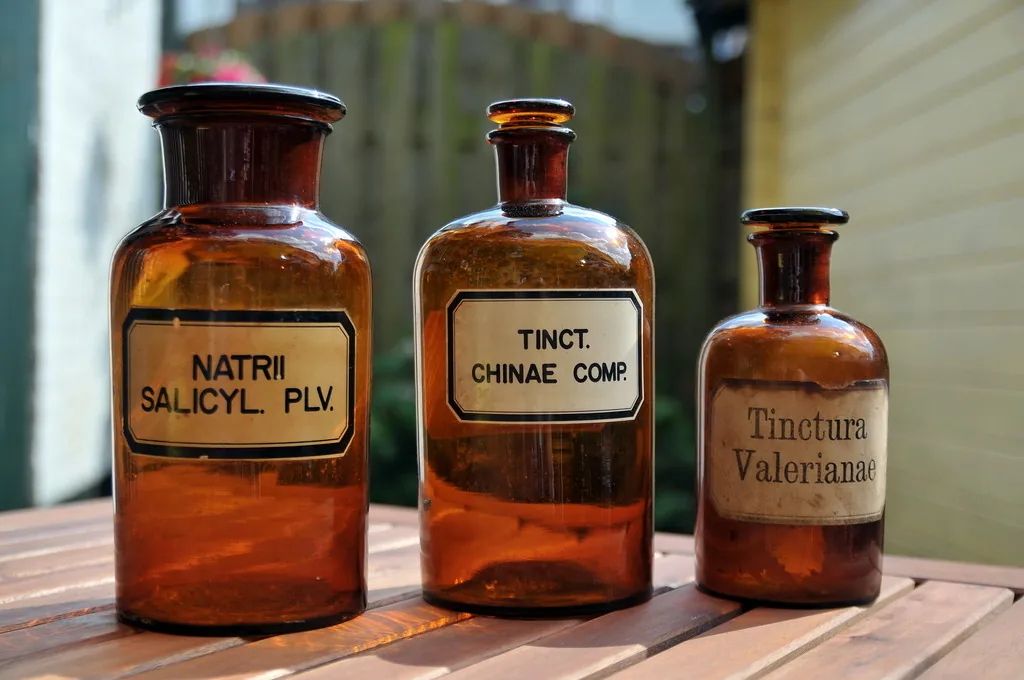 Photo: FaceMePLS, CC BY 2.0, via Wikimedia Commons
#Drops or millilitres?
This is the most common source of confusion. A drop is a small measure – about 20 drops make roughly 1 ml. A teaspoon holds about 5 ml, which is several times more than one dose. So:
- do not replace drops with a teaspoon "by eye";
- if the instructions are in drops, count drops;
- if the instructions are in millilitres, use a measuring cup or a needle-free syringe from the pharmacy.
You do not need to be accurate to the last drop, but it is important to measure the same way every time.
#How to use the dropper
The dropper is the most convenient way to measure, as long as you use it correctly.
#Hold the bottle upright
When the bottle is tilted, the drops come out in different sizes. Turn it with the dropper pointing straight down over the glass and let the liquid drip by itself, without shaking it.
#Count calmly
If it drips too fast, press the bottle lightly or turn it upright for a second and start again. Better to spend half a minute than to "pour out" a dose at random.
#Keep the dropper away from the glass and your mouth
That way the bottle stays clean for longer and no traces of food or water get into it.
#How to dilute
The instructions for our tinctures recommend taking them diluted in a glass of water. The reasons are practical.
#A milder taste
The concentrated extract is bitter, pungent or astringent, depending on the herb. Diluted in water, it is much easier to take.
#Gentler on the mucous membranes
Tinctures are water-alcohol extracts (about 20% alcohol), and each dose contains a small amount of alcohol. Undiluted, it can irritate the mouth, throat and stomach, especially in people with sensitive mucous membranes.
#How much water?
An ordinary glass of water – about 100–200 ml – is quite enough. Use water at room temperature. If you prefer a hot drink, make sure it is warm rather than boiling. Stir and drink it straight away, not in sips throughout the day – that way you take the whole dose at once.
#When to take it
The instructions for most of our tinctures recommend taking them 10–15 minutes before a meal. If the dose is several times a day, spread the doses evenly – for example before breakfast, lunch and dinner.
If you miss a dose, do not double the next one – simply continue with your usual schedule. Tinctures should not be taken together with alcoholic drinks.
#Consistency matters more than the exact time
Herbs usually work gradually, so taking them regularly matters more than whether you drank your glass at 7:30 or at 8:00. A few ideas that help:
- link taking it to a habit you already have – for example the glass of water before breakfast;
- keep the bottle somewhere visible in the kitchen cupboard, next to the glasses;
- if you often forget, set a reminder on your phone.
How many weeks to continue and when to take a break depends on the product – follow its instructions and, if in doubt, ask a pharmacist.
#How to store the tincture
The storage conditions are stated on every product:
- in a dry place, protected from direct sunlight;
- at a temperature between 5 and 25 °C;
- out of the reach of young children.
Do not store it in the fridge – the recommended temperature is 5–25 °C. A kitchen cupboard away from the hob and oven is suitable. Do not leave the bottle on the windowsill or in the car in summer. Close the cap tightly after each use.
#Expiry date
Every bottle has an expiry date – check it on the packaging and do not use the product after it.
#Sediment around the neck of the bottle
Sometimes a thin layer of sediment from plant substances collects around the dropper or at the bottom. This is normal for a natural extract. Wipe the neck and shake the bottle before use. If the tincture suddenly changes colour or smell, do not use it.
#More questions?
What tinctures are and how they are made is explained in the article What are herbal tinctures?. You will find answers to questions about the effect, duration and combining with other products in Frequently asked questions about herbal tinctures. And if you enjoy reading about the plants themselves, you will find books about herbs in the Other category.
#Safety in brief
- Pregnant and breastfeeding women – our tinctures are not intended for them.
- Do not give tinctures to children without advice from a paediatrician; many products are not intended for people under 18.
- If you drive, avoid alcohol, take medicines or have a chronic condition, ask a doctor or pharmacist before you start.
#When to see a doctor
Stop taking it and see a doctor if, after a tincture, you get a rash, itching, swelling of the face or lips, severe stomach pain, palpitations or dizziness. If you have difficulty breathing or swelling of the throat, seek emergency help.
Also see a doctor if the complaints that made you reach for herbs persist, get worse or keep coming back.
This article is for educational purposes and does not replace advice from a doctor. Food supplements are not medicines and are not intended to treat diseases. If you have a chronic condition, are pregnant or breastfeeding, or take medication, consult a specialist before use.