Frequently Asked Questions About Herbal Tinctures
Table of Contents
#The most frequently asked questions about herbal tinctures
Many of you are not familiar with the medicinal properties of herbs, how they act on the body, how long they need to be taken to have an effect, and many other questions you may be asking yourselves.
At Bilkovi Tinkturi BG, we have tried to gather the answers to most of them in this article.
Stay with us to find answers to your most frequently asked questions and to learn more about the world of herbs and the healing action of herbal tinctures.
To begin with, if you are not at all familiar with what herbal extracts are, you can read the following two articles:
➡ WHAT ARE THE DIFFERENT HERBAL EXTRACTS?
Here are a few questions that concern people and that they often ask about herbal extracts:
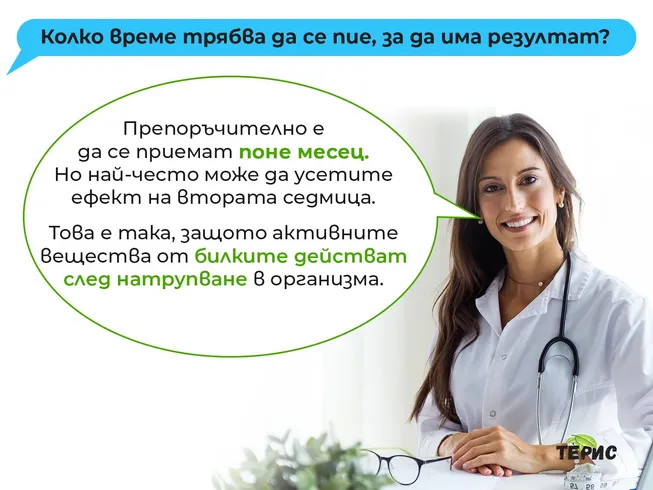
#How long do herbal tinctures need to be taken to get results?
The effect of a tincture varies according to how each body responds. It is advisable to take them for at least a month. But most often you may feel an effect in the second week. This is because the active substances in herbs act after they build up in the body.
Depending on the desired goal, or as recommended by a health professional, they can be taken for different periods of time and in different amounts.
#How long do herbal tinctures last?
Here are a few questions that concern people and that they often ask about herbal extracts:
- How long do herbal tinctures keep?
- Do herbal tinctures go off?
- Do herbal tinctures have an expiry date?
- Do herbal tinctures need to be kept in the fridge?
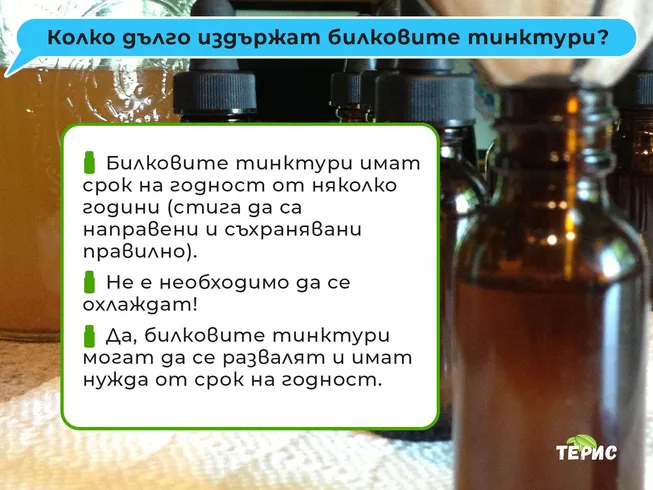
The short answer is that herbal tinctures have a shelf life of several years, as long as they are made and stored correctly!
They do not need to be refrigerated.
Yes, herbal tinctures can go off and they do need an expiry date.
The industry standard is to put an expiry date on every herbal supplement that is consumed.
The industry standard for an alcohol tincture is two years.
Tinctures are valued for their long shelf life. Unofficially they can last even longer, as long as they have been stored correctly.
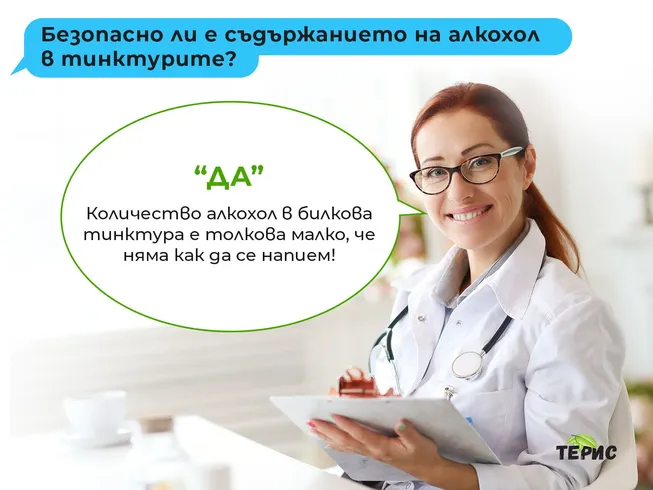
#Is the alcohol content of tinctures safe?
Is the alcohol content of tinctures safe?
Other very frequently asked questions include "Can children take herbal tinctures?" and "Can you get drunk on a tincture?"
One of the advantages of alcohol-based tinctures is that the body can absorb the alcohol quickly, and it does not have to reach our gut to be absorbed, as pills and capsules do.
Alcohol-based tinctures are incredibly fast-acting because alcohol can enter our bloodstream very quickly; this is what makes them such effective herbal remedies.
The important point here, however, is that we take such a small amount of alcohol in a tincture that there is no way we can get drunk or be harmed by it!
#The alcohol content of tinctures
The amount of alcohol in a herbal extract is so minimal that it compares to that in vanilla extract. Even a ripe banana contains more alcohol than a herbal tincture. The small percentage of alcohol also helps preserve the extract and prevents degradation, loss of herbal properties and the growth of bacteria.
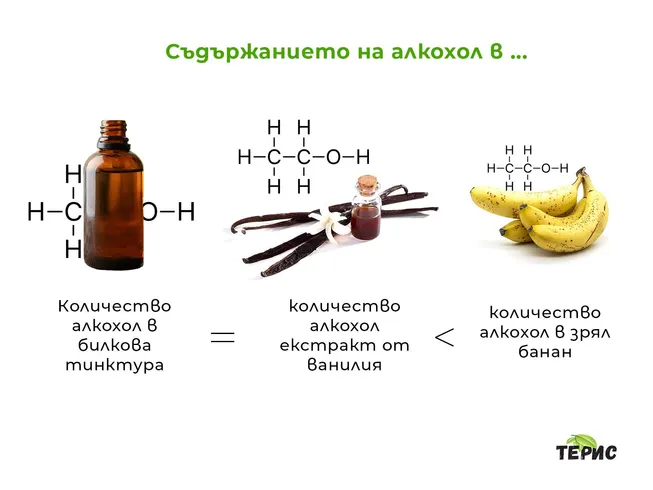
And if you have no religious or other reasons, or allergies, taking an alcohol-based tincture is the best option, because it is the most concentrated and effective form for the body.
#Are tinctures safe during pregnancy and breastfeeding?
Women often ask whether herbal tinctures can be taken while breastfeeding.
Both "yes" and "no".
It is not advisable in general, because everything you take passes into the breast milk, and although they are herbs, as a whole they are not intended for babies. But of course, if you have consulted a health professional, they can advise you on which herbal extracts you can take and in what amount.
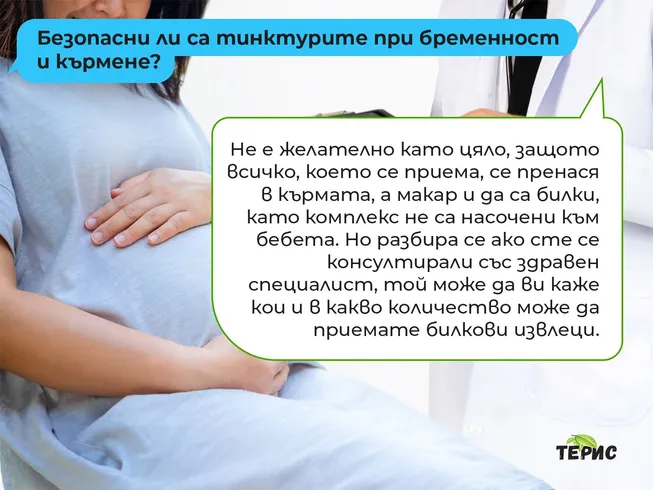
The more significant concern for pregnant and breastfeeding mothers is not the alcohol content but the herbs themselves. The better question is whether a given herb is safe during pregnancy and breastfeeding.
- Pregnancy
Very few herbs have been proven completely safe for babies in the womb. We know that herbs have powerful actions and can cross the placenta to the baby, affect hormonal balance or stimulate early labour. It is best not to take many herbs during pregnancy, apart from nourishing herbs that support a healthy pregnancy, such as nettle and raspberry, unless they are absolutely necessary and their use helps avoid a more aggressive treatment. It is always wise to talk to your midwife, doctor or other healthcare provider if you want to use herbs during pregnancy.
- Breastfeeding
Any herbs a breastfeeding mother takes can pass through her breast milk to the baby. Babies are much more sensitive to herbs than adults. Avoid using strongly cleansing or antiparasitic herbs while breastfeeding. Infants metabolise herbs differently from adults, and herbs often have a stronger or different action in babies and young children than in adults.
#How should herbal tinctures be stored correctly?
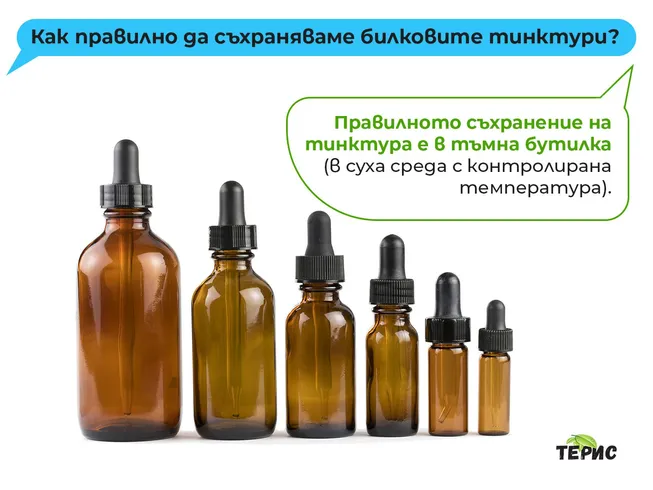
Whatever a herbal tincture is made from or whatever kind it is, we simply need to store it in a dark bottle.
You don't even need to keep it in the fridge. Just seal the cap tightly and put it in a dry place with a controlled temperature (such as your pantry or a kitchen cupboard, for example) - tinctures lose potency when exposed to light, heat, moisture and dramatic temperature fluctuations.
We should not store tinctures in direct sunlight by a window or in the car during a hot summer or a cold winter.
#Does time affect the action (potency) of herbal tinctures?
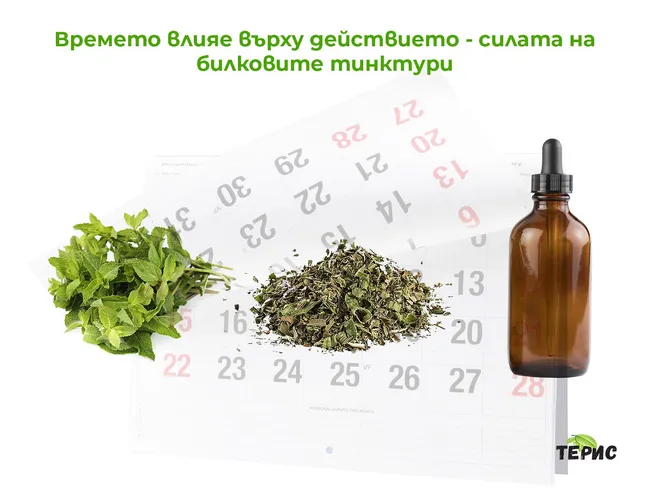
Time affects all herbal preparations in terms of potency and effectiveness. The more time passes, the less potent a preparation becomes. As soon as a plant is harvested, its medicinal properties begin to fade.
Solvents (water, ethyl alcohol, glycerine, etc.) can help extract and preserve the plant's properties for a while, but effectiveness naturally declines over time.
#Is it normal for herbal particles to float in the bottle?
It is completely normal for herbal tinctures that have been stored for a long time, or that were filtered just before bottling, to have herbal particles floating in the liquid.
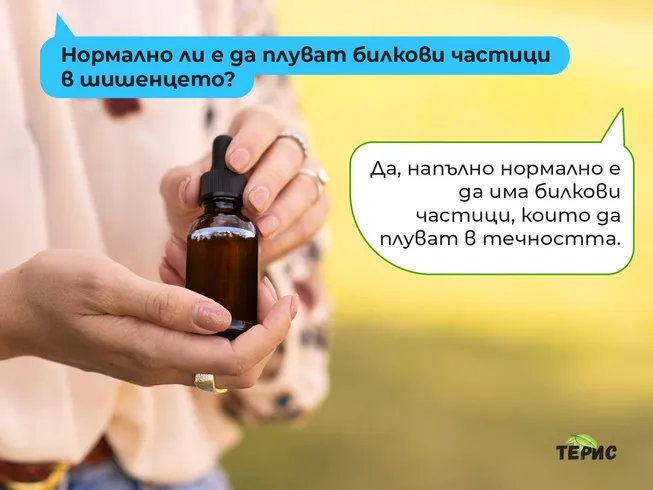
Potent plant extracts also contain resins, which is why they work so well. Over time these build up on the dropper or the bottle. It is common to see a ring of resin around the dropper or the neck of the bottle. If you notice this, don't worry. Simply wipe it off and shake your tincture well before taking it.
#Where can we buy herbal tinctures?
You can buy them from many physical locations, our partners or distributors, but the safest and most reliable way is to order them online from our website for fast and secure delivery. You can browse and order from our page with products - herbal tinctures

#Can herbal tinctures be taken with antidepressants?
Some herbs can interact with medicines - for example St John's wort (including with antidepressants), hawthorn and ginger. If you take medicines, consult a doctor or pharmacist before use. Possible side effects could occur if the particular person taking them has an allergy or intolerance to the active substances.
Consulting a specialist or health adviser is always recommended before taking them, and the recommended intake should not be exceeded.
#How can we remove the alcohol from a herbal tincture?
If we find ourselves with a herbal tincture made with spirit (ethyl alcohol) and want to benefit from the medicinal properties of the herbs but want to remove the alcohol it contains, for reasons such as allergy, alcohol dependence or religion, even though the amount of alcohol is so minimal, it is possible. We needn't worry.
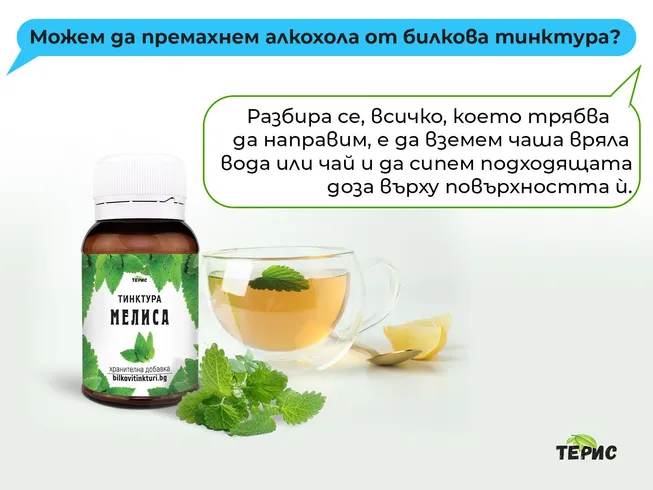
Removing the alcohol from a tincture is easy. All we need to do is take a cup of boiling water or tea and pour the appropriate dose onto its surface. We leave it uncovered so that the heat can evaporate the alcohol from the water. If we cover the tea, the alcohol will not evaporate. We wait at least 5 minutes for the alcohol to dissipate. And that's it.
#How to make and use it correctly
A solvent such as ethyl alcohol is an excellent preservative. A correctly prepared alcohol tincture will not grow mould or develop bacteria the way a glycerine tincture or other herbal preparations such as syrups, vinegars, infusions, decoctions and teas can.
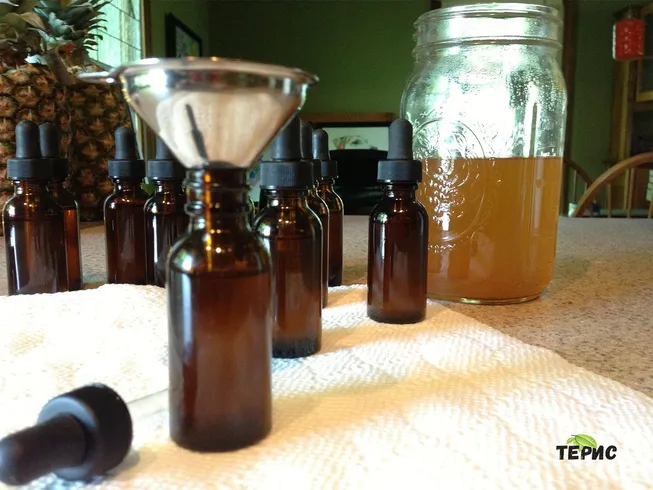
The beneficial properties are extracted in the form of a tincture, as we have already explained. The worst that can happen with an old tincture is that it simply will not be as potent as it was when it was first made.
The way you use the tincture can also affect how well it keeps. For example, putting drops of tincture directly into your mouth is less hygienic than adding drops of tincture to a small amount of water.
#How can we tell whether a tincture has gone off?
Trust your senses to tell when a tincture has gone off.
Recommendations for the shelf life of tinctures depend on how they were made, stored and used, and on whether you made them yourself or bought them from a manufacturer.
Let your five senses guide you and tell you whether your tincture has gone off or not. Think about how it looked, smell and taste your tincture and compare it with when you first tried it.
Does the extract smell of the herb or only of alcohol? Are there too many particles floating in the liquid? Has the colour changed drastically? Does it look mouldy? Remember, trust your gut and don't mistake herbal resins for mould.
#What is the dosage of a herbal tincture?
The most important fact:
Tinctures are more potent and more concentrated than teas, infusions and decoctions.
This means that the dose can be much smaller than theirs. There is no one-size-fits-all answer when it comes to herbal dosage. That is the art of herbalism.
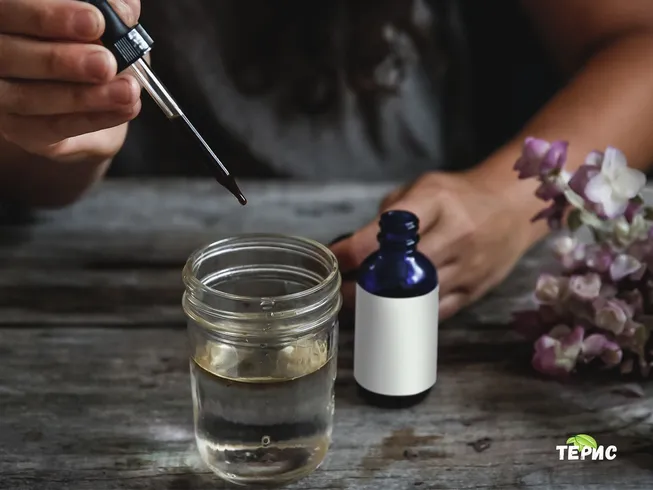
Still, as a general recommended intake, when considering the correct dosage of mild tonic herbs such as hawthorn, nettle and dandelion, you can take 20-30 drops mixed into a glass of water 2-3 times a day.
However, when working with stronger herbs such as echinacea or wintergreen, 10 drops three times a day are enough. There are also other herbs, rarely recommended, that are so strong that a single drop may be enough.
So remember - consulting a health professional before taking herbal extracts is always recommended!
As a rule, gentle, safe, nourishing and tonic herbs are usually recommended; stronger, more toxic medicinal herbs that call for extra caution are recommended less often.
All our herbal tinctures are made with herbs that are safe, gentle and effective for people.
Remember that the dose of herbs can be specific to each person.
In general, an adult weighing around 70 kilograms can take a recommended dose of 35-40 drops 2-5 times a day, depending on the particular case.
Generally speaking, herbal extracts are not taken more than five times a day unless acute illnesses such as a cold or flu are being actively treated.
If you weigh less than 70 kilograms and feel that your body is sensitive to medicines or food supplements, reduce the dose by half, to approximately 20 drops 2-5 times a day.
You can learn about the dosage and safety of herbal tinctures for children in our next article "Are herbal tinctures suitable for children?"
#Are there side effects from drinking herbal tinctures?
In general there are no side effects, except in specific individual cases. Before making and using a herbal tincture, a person should think about a few things.
· Whether they are allergic to a particular herb or herbs
· Whether they take any kind of medicinal preparations that could interact with a given extract
There are risks associated with toxicity and reactions with other medicines.
· whether the herb used in the extract is safe, as some may be toxic
That is why, before you try to make a herbal tincture at home, you must pay attention to the fact that some plants have toxic parts. It is therefore advisable to obtain them from an approved and trusted source before you try to make tinctures at home.
Some parts of plants can be really very harmful. In addition, some plants may be contaminated with things such as pesticides and heavy metals.
#How do we choose a trusted producer of herbal tinctures?
Always look for a trusted, certified source - a producer of herbal food supplements. And products should always be labelled with detailed information on: name; ingredients; expiry date; type of solvent used; batch number; recommended daily intake; storage; and any other special instructions.
Bilkovi Tinkturi BG is a certified Bulgarian producer of herbal food supplements - herbal tinctures.
Our mission is to care for and support health in every home with the help of entirely natural herbal products, just as has been done since ancient times.
We offer herbal tinctures with an entirely natural composition - they contain no chemical additives such as stabilisers, flavourings or colourings. Each tincture is a specially selected combination of herbs that has a positive influence on the condition and functions of the organs and systems of the human body for which it is recommended.
Herbs taken in the form of a herbal extract (herbal tincture) are at their most concentrated, and you will feel their results the fastest.
PHOTO:
#How do I take a tincture?
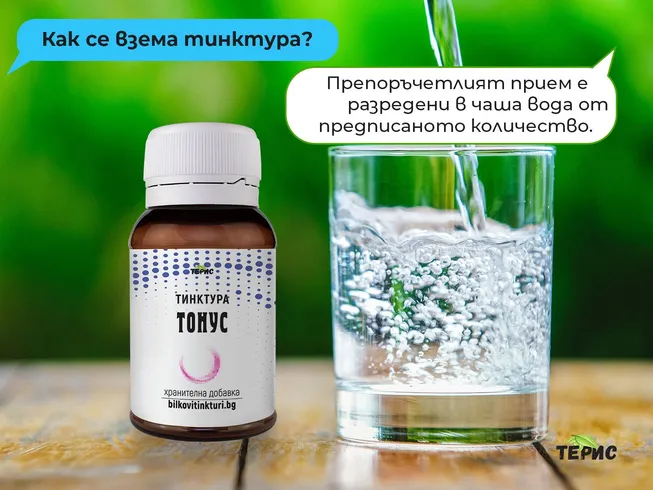
Herbal tinctures are best taken diluted in a glass of water, but they can also be taken in tea or juice. Simply add the recommended amount of tincture to a small glass of liquid. Taking it directly in the mouth is not recommended, because the undiluted extract has a rather strong taste and may irritate the sensitive tissues in the mouth.
#The power of herbs is boundless!
For hundreds of years, herbs have been the most effective and harmless way of healing. In the form of herbal extracts (pure herbal extracts) they act on the body the fastest. That is why at Bilkovi Tinkturi BG we have gathered their healing powers into bottles of herbal tinctures, carefully selected, tested and strictly prepared.
The power of herbs is boundless; make use of their healing strength and stay healthy.
Thank you for learning and healing with us! We have many more videos and posts about herbs and their medicinal properties, which you can browse on our blog - the Bilkovi Tinkturi BG blog.
Did you know that you can also watch our videos on the Bilkovi Tinkturi BG Facebook profile or the Bilkovi Tinkturi BG YouTube channel?
We look forward to seeing you in our next articles, where together we will dive into the power of nature through pure herbal extracts and stay healthy and beautiful.
If you have any further questions, please do not hesitate to contact us. We are always here to help. :)
* This post is for educational purposes only. It does not replace medical care. Consulting a health professional (medical practitioner) is always recommended.
This article is for educational purposes and does not replace advice from a doctor. Food supplements are not medicines and are not intended to treat diseases. If you have a chronic condition, are pregnant or breastfeeding, or take medication, consult a specialist before use.