Ragweed Allergy and Autumn Allergies: Herbs and Tips
Table of Contents
Many people associate allergies with spring and blossoming trees. For many people with allergic rhinitis, however, the most difficult period begins at the end of summer and lasts until the autumn frosts. The main "culprit" in Bulgaria is ragweed – an undemanding weed that grows along roadsides, on abandoned plots and at the edges of fields. Why its pollen causes so much trouble, how to reduce contact with it and which herbs are traditionally used this season – let us take them in turn.
#What ragweed is and why it is such a nuisance
Common ragweed (Ambrosia artemisiifolia) is a plant brought to Europe from North America. It spreads quickly, especially on disturbed ground – building sites, road verges, uncultivated fields. In Bulgaria it usually flowers from August to October, and pollen levels in the air are highest at the end of August and in September. The season dies down with the first frosts.
A single plant can release a huge amount of fine pollen, which the wind carries over long distances. That is why you may have symptoms even if there is not a single stalk of ragweed near your home.
#How ragweed allergy shows itself
The symptoms often resemble a cold, but there are some characteristic signs:
- sneezing in bouts, especially in the morning;
- a watery discharge from the nose and a blocked nose;
- itching in the eyes, nose or palate;
- red, watering eyes;
- tiredness and poor sleep because of difficulty breathing at night.
Unlike a cold, an allergy is not usually accompanied by a temperature and it lasts for weeks, for as long as the flowering continues. If you are not sure what is happening to you, an allergist can carry out tests and confirm exactly what you are allergic to.
#Practical tips for pollen season
The most effective strategy is to reduce your contact with pollen. It sounds simple, but it makes a difference to how you feel day to day.
#At home
Air your home in the evening or after rain and keep the windows closed in the morning and on dry, windy days. If you have air conditioning or an air purifier with a HEPA filter, use them. Do not dry your washing outside on peak days – pollen sticks to fabric.
#Outdoors
Sunglasses protect your eyes from some of the pollen. When you get home, change your clothes, wash your face and hands and, in the evening, your hair too, so that you do not carry pollen onto your pillow. Rinsing your nose with saline solution is a simple, accessible way to remove particles that have stuck.
#Be careful with ragweed's "relatives"
Ragweed belongs to the daisy family (Asteraceae), which also includes many popular herbs – chamomile, calendula, yarrow, dandelion, echinacea. People allergic to ragweed sometimes react to these too, as well as to certain foods (for example melon, banana and sunflower seeds). If you notice itching in your mouth or throat after a herbal tea or a piece of fruit, stop and consult an allergist.
#Herbs in ragweed season: realistic expectations
When we search for "herbs for allergies", we often hope for quick and complete relief. The realistic expectation is different. Herbs do not block the allergic reaction in the way that medicines prescribed by a doctor do. They are traditionally used as gentle, additional support for the body – for the skin, the mucous membranes and general well-being in a demanding season. If your symptoms are severe, the foundation is always treatment from your doctor, and herbs can only complement it after a consultation.
Here are a few plants that folk tradition associates with these months.
#Wild pansy
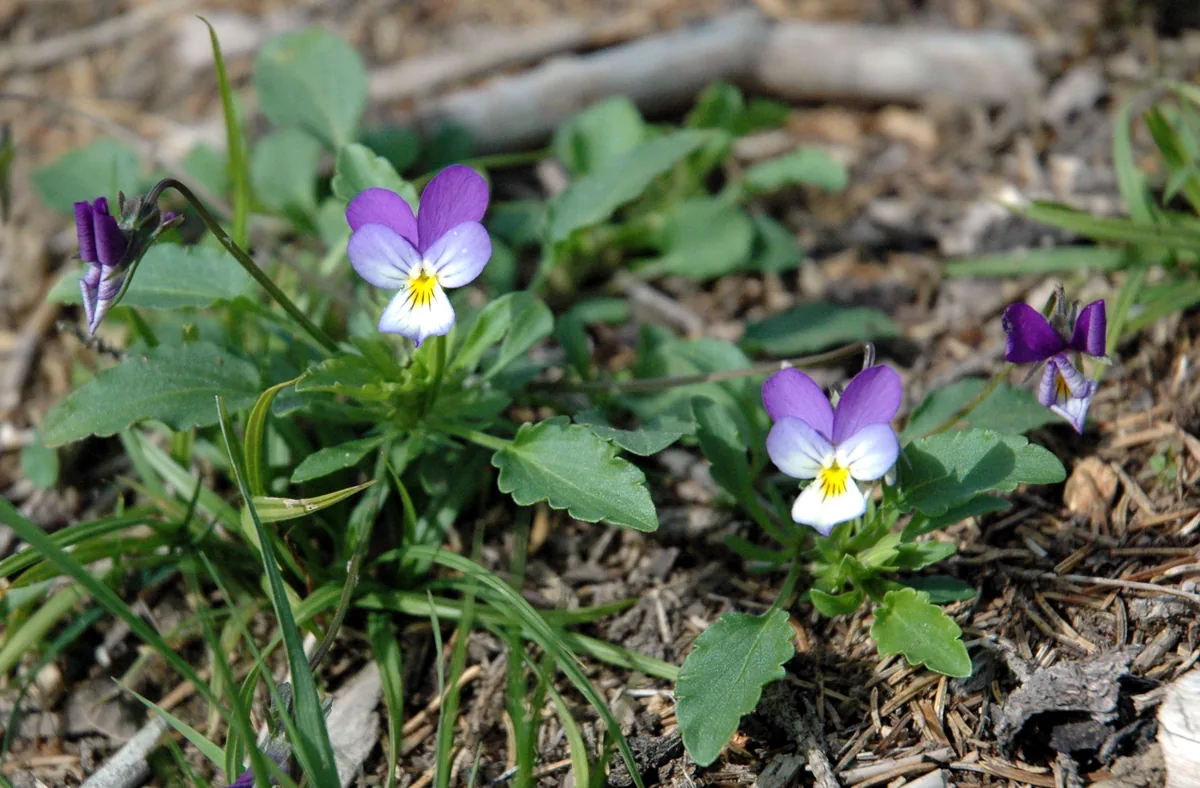
Wild pansy (heartsease) is a delicate flower that grows in meadows and fields throughout the country. It is traditionally used to support the skin and the respiratory tract and the body's resilience in demanding periods. Herbal tincture Viola is made from wild pansy flowers – a convenient way to include the herb in your daily routine without preparing a decoction. The product is not intended for people under 18 and should not be taken during pregnancy. You will find more about the history of the flower in the article Wild pansy – love potion or herbal remedy?
#Nettle
Nettle is one of the best-known spring herbs. In folk tradition nettle leaves are valued as a general tonic plant rich in minerals. You can find it as herbal tincture Urtikatrin with nettle leaves. The product is not intended for people under 18 and should not be taken in the last months of pregnancy. Read more in the article Nettle – the stinging herb with healing properties.
#Mursalski tea
When your throat is irritated by the dry autumn air and frequent sneezing, a cup of warm Mursalski tea is a pleasant ritual. It is traditionally used to support the respiratory system. As well as a tea, it is available as herbal tincture Mursalski tea.
You will find more products in the Allergies category.
#How to take tinctures
Tinctures are taken diluted in a glass of water, according to the product instructions. Start with one herb so that you can see how you tolerate it, and do not exceed the recommended daily dose. For people with allergies it is especially important to introduce new plants gradually – any plant, however beneficial, can cause an individual reaction.
#Safety
- Tinctures are food supplements. They are water-alcohol extracts (about 20% alcohol) and each dose contains a small amount of alcohol.
- They are not recommended during pregnancy and breastfeeding.
- Do not give tinctures to children without advice from a paediatrician; many products are not intended for people under 18.
- If you take antihistamines, corticosteroids or other long-term treatment, ask your doctor or pharmacist before adding herbs.
- If you have a known allergy to plants of the daisy family, check the ingredients of every herbal product carefully.
#When to see a doctor
See a doctor or an allergist if:
- you have wheezing, shortness of breath or a cough that wakes you at night – this may be a sign of asthma;
- the symptoms do not respond to the recommended medicines;
- you develop a temperature, facial pain or thick, coloured discharge – a sinus infection is possible;
- you get swelling of the lips, tongue or throat – in this case seek emergency help immediately;
- the allergy is interfering with your sleep, work or studies.
An allergist can help you with a diagnosis, medicines and, if needed, immunotherapy – a long-term approach carried out under medical supervision.
#With a little planning
Autumn allergy is unpleasant, but with a little planning it can be much easier to bear. Limit your contact with pollen, look after your mucous membranes and, if you decide to include herbs, choose carefully and follow the instructions. And when the symptoms become serious, do not put off seeing a doctor.
This article is for educational purposes and does not replace advice from a doctor. Food supplements are not medicines and are not intended to treat diseases. If you have a chronic condition, are pregnant or breastfeeding, or take medication, consult a specialist before use.