Herbal Tinctures and Medicines: Combinations That Need Care
Table of Contents
"They are only herbs, they cannot do any harm." We hear this sentence often – and we understand where it comes from. Herbs are part of our tradition, and tinctures are food supplements, not medicines. But precisely because plants contain active substances, they can meet medicines in the body and change the way they work. In this article we look at the general principles, a few well-known examples and – most importantly – what to do if you take medicines and want to include a herbal tincture.
This article is not a complete list of interactions. Such a list would be misleading, because the risk depends on the specific medicine, the dose, your state of health and many other factors. So the guiding rule is a single one: ask your pharmacist or doctor.
#How herbs and medicines "affect" each other
Broadly speaking, there are two kinds of interaction.
#When the herb changes the medicine's path
The liver and the gut have systems that process medicines and remove them from the body. Some plant substances can speed up or slow down this processing. If it speeds up, the medicine may become weaker. If it slows down, the medicine may be stronger than intended.
#When the herb and the medicine act in the same direction
If a herb and a medicine have a similar effect – for example on blood clotting or on the heart – their actions can add up. The result may be a stronger effect than intended.
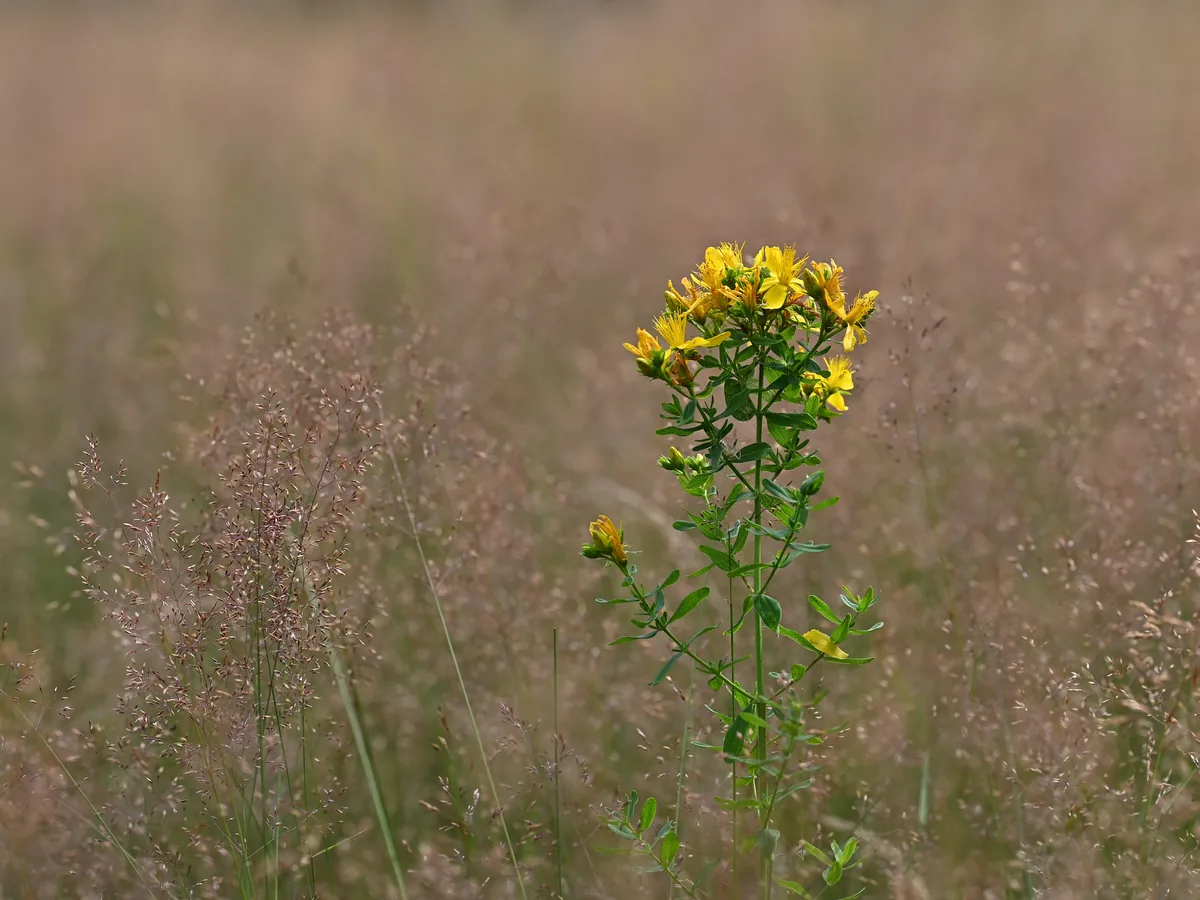 Photo: Krzysztof Ziarnek, Kenraiz, CC BY 4.0, via Wikimedia Commons
#Three herbs that need special care
#St John's wort
St John's wort is one of the most popular Bulgarian herbs and, at the same time, the best-known example of a herb with many interactions. It is known that it can reduce the effect of a number of medicines by speeding up the way the body processes them. These include hormonal contraceptives, some blood thinners, heart medicines, medicines taken after a transplant and others. Particular care is also needed with antidepressants, because the combination can intensify their side effects.
If you take any prescription medicines at all, do not start Hiperikum without a consultation. The tincture is not intended for people under 18 or for pregnant and breastfeeding women, and it is not recommended for prolonged use if you have high blood pressure. For the traditions surrounding the herb, read St John's wort – the sunny herb.
#Hawthorn
Hawthorn is traditionally used to support the cardiovascular system. That is exactly why people who already take medicines for the heart, heart rhythm or blood pressure need to be careful: hawthorn can intensify or change the action of these medicines. If you have heart disease, do not add Krategi to your treatment without your cardiologist's agreement.
#Ginger
Ginger is a much-loved spice, but in larger amounts it can affect blood clotting. The page for the tincture Dzhindzhar states explicitly that people who take anticoagulants and antiplatelet medicines – for example aspirin, clopidogrel and others – need to be careful. The same applies to people who are due to have surgery.
#Other tinctures of ours to bear in mind
These three herbs are not the only ones that need care. Here are a few more examples from our range:
- Dilyanka, Balans and Relax contain valerian – do not combine them with sleeping pills or sedatives without consulting a doctor;
- Tonus contains turmeric – take care if you are on anticoagulants or have gallstones;
- Rozmarin can raise blood pressure – it is not suitable if you have hypertension;
- Kamenolomna (bearberry) is intended for short-term use only.
#Do not forget the alcohol
Our tinctures are water-alcohol extracts (about 20% alcohol), which means that each dose contains a small amount of alcohol. With certain medicines even this matters:
- some antibiotics and antifungal medicines do not go together with alcohol;
- sedatives, sleeping pills and some painkillers can increase drowsiness in combination with alcohol;
- with some diabetes medicines alcohol can affect blood sugar;
- if you have liver disease, every additional source of alcohol should be discussed with a doctor.
Check the leaflet for your medicine – if it says it should not be combined with alcohol, ask the pharmacist whether this also applies to the tincture.
#What to do in practice
#Make a list
Write down all the medicines you take – including those without a prescription, vitamins, food supplements and herbal teas. Take the list with you to every doctor's appointment and to the pharmacy.
#Show the bottle
When you ask a pharmacist, show them the label or open the product page. The ingredients and contraindications are listed there, and that makes the advice much more precise.
#One change at a time
If your doctor allows you to include a tincture, do not start it at the same time as a new medicine. That way it will be easier to tell what is behind any change in how you feel.
#Tell your doctor if you stop
Stopping a herb is also a change. If it has affected the level of a medicine, stopping it can change that medicine's effect in the opposite direction. So let your doctor know when you start and when you stop a supplement.
#Never replace a medicine with a herb
Do not stop or reduce a prescribed medicine on your own judgement because you have started a tincture. Food supplements do not replace prescribed treatment.
You will find more answers to common questions in the article Frequently asked questions about herbal tinctures, and the products related to the heart in the Heart and circulatory system category.
#When to see a doctor
Contact a doctor or pharmacist before starting a herbal tincture if you take blood thinners, medicines for the heart or blood pressure, antidepressants, hormonal contraceptives, medicines after a transplant, or medicines for epilepsy or diabetes, and also if you are due to have surgery.
See a doctor immediately if, after starting a tincture, you notice:
- unusual bleeding, bruising easily, blood in your urine or stools;
- a strong, pounding heartbeat, an irregular pulse, dizziness or feeling faint;
- a rash, swelling of the face or difficulty breathing;
- severe drowsiness, confusion or a sudden change in mood;
- that a medicine which has worked well until now suddenly "is not helping".
A consultation is essential during pregnancy and breastfeeding, and for people with chronic conditions. Do not give tinctures to children without advice from a paediatrician; many products are not intended for people under 18.
#In conclusion
Herbal tinctures and medicines can coexist, but only when everyone involved – you, your doctor and your pharmacist – knows what you are taking. St John's wort, hawthorn and ginger are good examples of the fact that "natural" does not mean "free of interactions". A question at the pharmacy takes a minute and can save you a lot of trouble.
This article is for educational purposes and does not replace advice from a doctor. Food supplements are not medicines and are not intended to treat diseases. If you have a chronic condition, are pregnant or breastfeeding, or take medication, consult a specialist before use.