Kamenolomna and Bearberry: The Story Behind an Old Name
Table of Contents
Among herbs there are names that sound like a promise. The Bulgarian "kamenolomka" and "kamenolomna" – literally "stone-breaker" – are among them: we immediately picture a plant that breaks stones. The truth is more interesting and more modest: the name tells of the place where these plants grow and of the way people in the past interpreted nature. We will trace where the name comes from, which plants are associated with it, what our Kamenolomna tincture contains and what we can realistically expect from it.
#Saxifrage: where the name comes from
In botany, "kamenolomka" is the Bulgarian name for the genus Saxifraga, saxifrage. The Latin name comes from two words: saxum – stone, and frangere – to break. Literally "stone-breaking".
Why? Many of these plants grow in cracks in rocks and look as though they have forced their way through the stone. In medieval Europe the so-called "doctrine of signatures" was popular – the belief that a plant's appearance or the place where it grows hints at what it might be good for. A plant that "breaks rocks" was, logically enough, linked to the "stones" in the body.
Today many species of saxifrage are grown as ornamental plants in rockeries and stone gardens, where they form dense cushions with tiny flowers. Today we know that their reputation as "stone-breakers" is more of an image than a scientific explanation. No herb "dissolves" or "breaks up" kidney stones, and promises of this kind should make us cautious.
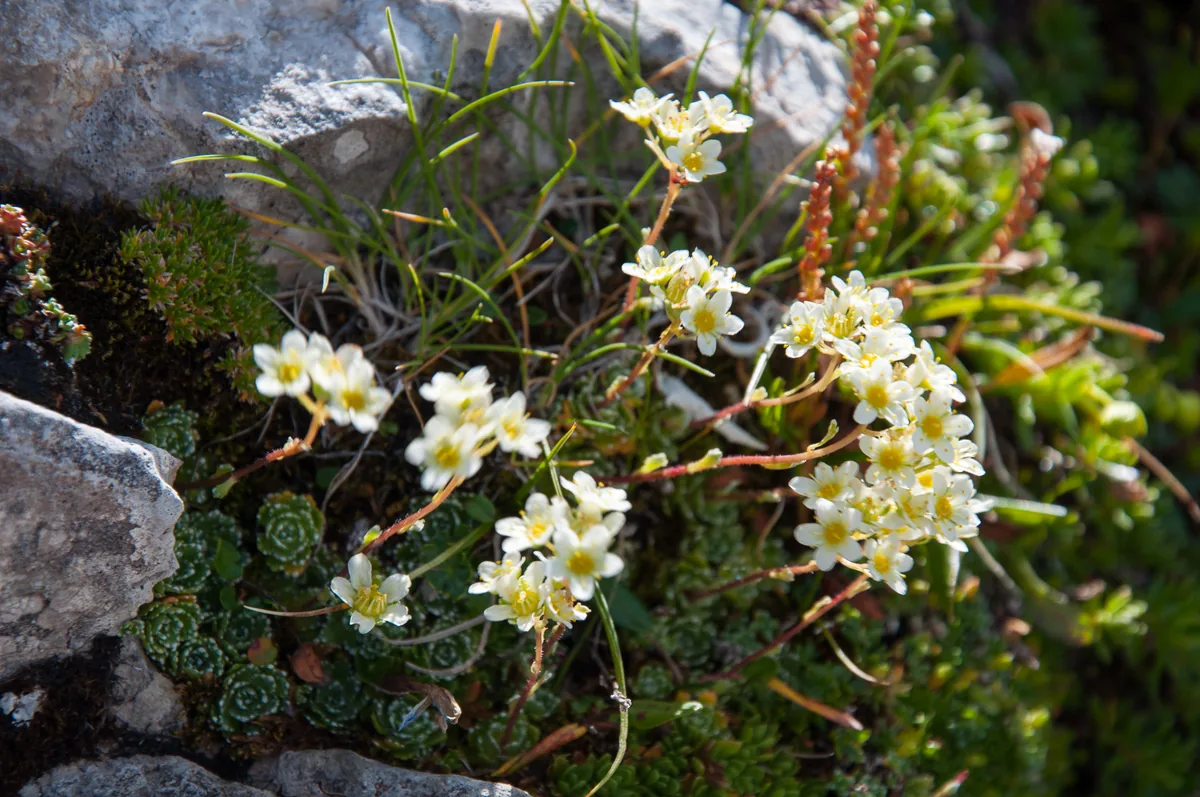 Photo: Erik, CC BY 2.0, via Wikimedia Commons
#What the Kamenolomna tincture contains
The name of our tincture refers to this old image of plants from the rocks. The herbal tincture Kamenolomna itself, however, is made from the leaves of bearberry (Arctostaphylos uva-ursi).
Bearberry is a low evergreen shrub with glossy leaves and small red berries. In Bulgaria we find it in the high mountains, in dry, stony places and in coniferous forests – in other words, it too is a plant of the rocks. You will find more about it in the article Bearberry – the herb among the rocks.
#How bearberry is traditionally used
Bearberry leaves are one of the best-known herbs in Europe for supporting the urinary tract. They are traditionally used:
- to support the normal function of the bladder and urinary tract;
- to support the kidneys as part of overall care for the body.
The main substance that attracts researchers' interest is arbutin. Precisely because of the strength of the leaves, bearberry is traditionally recommended to be taken for short periods – usually no longer than a week without consulting a doctor or pharmacist. While you are taking it, your urine may take on a greenish-brown tint – this is a known and harmless effect.
#Bearberry tea or tincture?
In home tradition bearberry is often prepared as a tea. Interestingly, the leaves are traditionally soaked in cold water for several hours rather than boiled – this way fewer tannins, which can irritate the stomach, pass into the drink. A tincture is a more convenient alternative: it needs no preparation, is easy to measure out and keeps for a long time. The same rule applies to both forms – a short period of use and following the instructions.
#Bearberry in the wider care of the urinary tract
Bearberry is not a herb for every day but for short periods. Everyday care of the urinary tract lies in other, simpler things: enough water, emptying the bladder regularly, warm clothing in the cold months and paying attention to the body's signals. We cover these habits, as well as the lingonberry tincture, in detail in the article Tsistokliyn – herbal support for the urinary tract.
You will find more products in the Kidneys and bladder category.
#A tendency to kidney stones: see a doctor first
Herbs do not dissolve or flush out stones and do not replace check-ups and prescribed treatment. If you are prone to kidney stones, the most important thing is to work together with a doctor – a urologist or nephrologist. They will determine the type of stones and give you specific recommendations. The general advice often given includes:
- drinking enough water throughout the day so that your urine is pale;
- limiting salt and processed foods;
- moderate amounts of animal protein;
- a diet suited to the type of stones – for example, some people need to be careful with foods rich in oxalates, while others do not.
Do not start taking bearberry or any other herb "for stones" on your own initiative – discuss every supplement with the doctor who is monitoring you.
#How to take tinctures
Tinctures are taken diluted in a glass of water, according to the product instructions. Do not exceed the recommended daily dose. With bearberry this is especially important – take it for short periods and do not combine it with other products containing bearberry.
#Bearberry: contraindications and safety
- Pregnancy and breastfeeding – bearberry should not be taken during these periods.
- Liver – people with liver problems should avoid bearberry.
- Kidney disease – in chronic kidney disease every herb should be discussed with a doctor.
- Children. Do not give tinctures to children without advice from a paediatrician; many products are not intended for people under 18.
- Alcohol – tinctures are water-alcohol extracts (about 20% alcohol) and each dose contains a small amount of alcohol.
- Medicines – if you are on long-term treatment, ask your doctor or pharmacist.
#When to see a doctor
Symptoms affecting the kidneys and urinary tract should be taken seriously. See a doctor immediately if you have:
- severe, colicky pain in the lower back or side that spreads towards the groin;
- blood in your urine;
- a temperature and chills together with lower back pain;
- difficulty passing urine or being unable to pass urine;
- nausea and vomiting together with pain.
Also see a doctor if burning or frequent urination lasts more than a few days or keeps coming back, or if you are a man, a pregnant woman or a child – in these cases tests are needed.
#An image, not a promise
"Kamenolomna" is a beautiful name with a long history, but it is an image, not a promise. Behind our tincture stands bearberry – a herb from the rocky mountains that is traditionally used to support the urinary tract. Use it carefully, for short periods and according to the instructions, and always consult a doctor if you have kidney problems.
Photo: El gato Tito, CC BY 4.0, via Wikimedia Commons (cover)
This article is for educational purposes and does not replace advice from a doctor. Food supplements are not medicines and are not intended to treat diseases. If you have a chronic condition, are pregnant or breastfeeding, or take medication, consult a specialist before use.