Bearberry – the Herb Among the Rocks
Table of Contents
#Bearberry "Arctostaphylos uva-ursi"
Bearberry - "Arctostaphylos uva-ursi" is a plant species of the genus "Arctostaphylos", widespread in the circumboreal regions of the subarctic Northern Hemisphere. In Bulgaria the herb is known as Mecho grozde ("bear's grape").
Before antibiotics were discovered, uva ursi was used as a natural remedy for urinary tract infections.
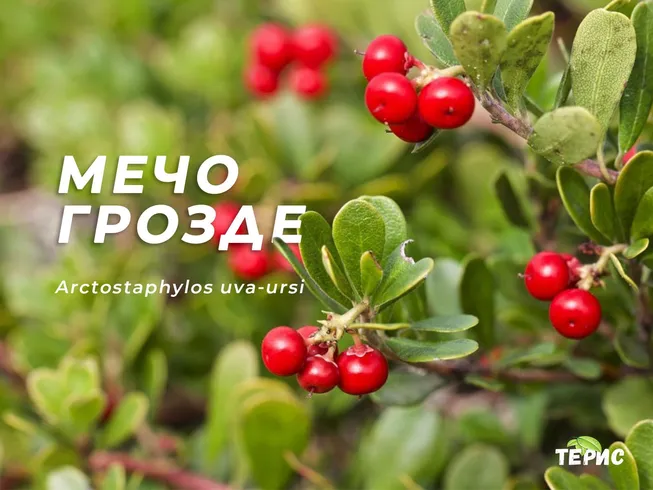
In this article we will introduce you to the potential health benefits and possible side effects of taking "uva ursi". You will also learn the recommended doses and what to look for when buying this food supplement.
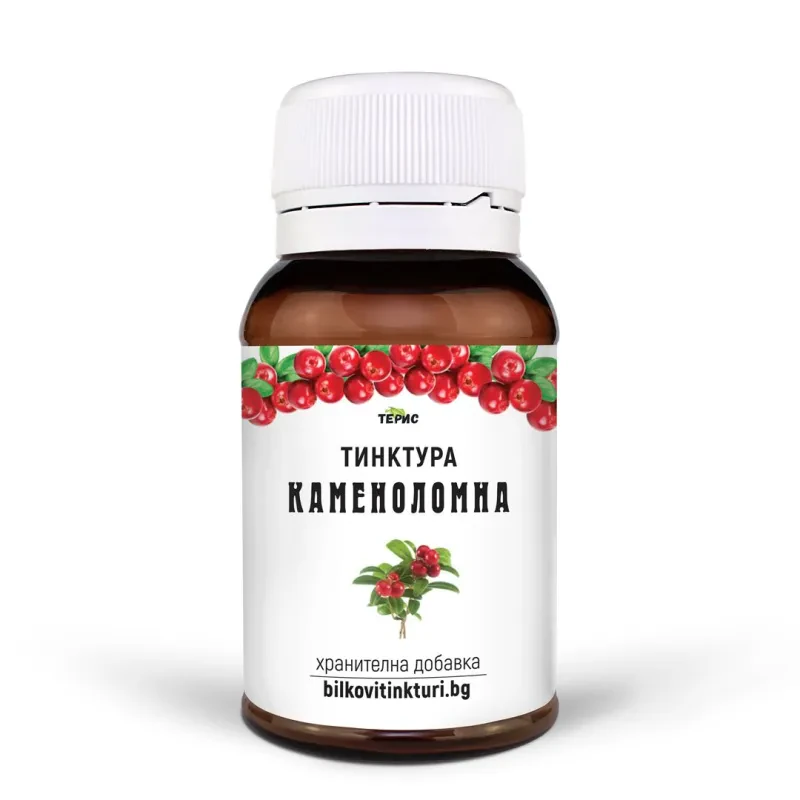
👉 Take a look at our tincture of the herb:
Bearberry food supplement - KAMENOLOMNA
#History and description
The name of the genus of "Arctostaphylos uva-ursi" comes from the Greek words arctos (άρκτος) - meaning "bear" - and staphyle (σταφύλι) - meaning "grape", referring to the fruits, which grow in clusters. In the wild they are usually eaten by bears.
The specific epithet "uva-ursi" comes from the Latin words uva (meaning grape) and ursus (bear), reflected in the plant's nickname, bear's grape.
The common name kinnikinnick, on the other hand, is an Algonquian word meaning "smoking mixture".
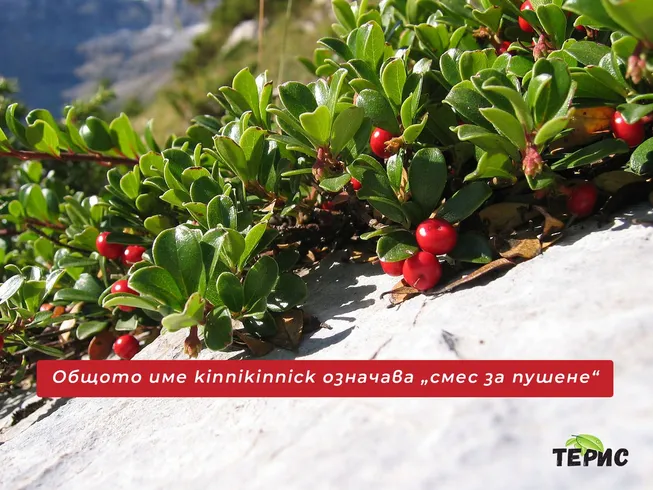
Native Americans smoked the dried leaves and bark of uva-ursi in pipes, on their own or mixed with other herbs, tobacco or dried dogwood bark.
There are many common names depending on the region, such as "sandberry", "barren myrtle", "wild cranberry" and others.
The distribution of Arctostaphylos uva-ursi is circumpolar; it is widespread in northern latitudes but restricted to high altitudes further south.
#Botanical characteristics
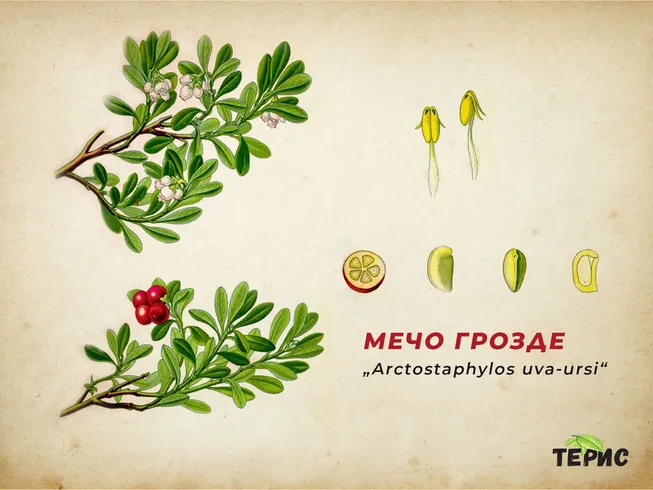
The plant is a small, low-growing woody shrub with an underground root and a height of 5 to 30 cm.
The leaves are evergreen, staying green for 1 to 3 years before falling.
The fruit is a red berry.
The leaves are glossy, small, thick and leathery. They are arranged alternately along the stems. The underside of the leaves is a lighter green than the upper side. New stems may be red if the plant is in the sun, but are green in shadier places. Older stems are brown. In spring they bear white or pink flowers.
Wild stands of Arctostaphylos uva-ursi can be dense and of up to medium height.
Terminal clusters of small flowers bloom from May to June.
The flowers are white to pink and are followed by round, fleshy, bright red to pink fruits.
The smooth, glossy fruits range from 6 to 13 mm in diameter.
The fruit stays on the plant until early winter. Its taste is bittersweet when raw, but sweeter when cooked or dried.
The berries are edible for humans but are generally considered unpleasant. Bears and other animals eat the berries, as the plant's name makes clear.
#Chemical composition of bearberry
Herbal supplements made from the leaves of "uva ursi" have been used as a natural therapy for cystitis (bladder infections) and urinary tract infections. The plants contain natural chemicals with infection-fighting properties called glycosides and arbutin.
Glycosides may help reduce bacteria in the urine. Your body converts the glycosides into hydroquinone, a compound with antibacterial properties.
The herb contains a variety of phytochemicals, including ursolic acid, tannic acid, gallic acid, some essential oils and resin, hydroquinones (mainly arbutin, up to 17%), tannins (up to 15%), phenolic glycosides and flavonoids.
The leaves of Arctostaphylos uva-ursi contain arbutin, which is metabolised to form hydroquinone, a potential liver toxin.
The hydroquinones in bearberry are the most powerful constituent, which fights various bacteria in our body and helps to stop inflammatory processes. That is why this herb is also recommended for supporting immunity. It is also used for prostate gland problems, vaginal discharge and gout.
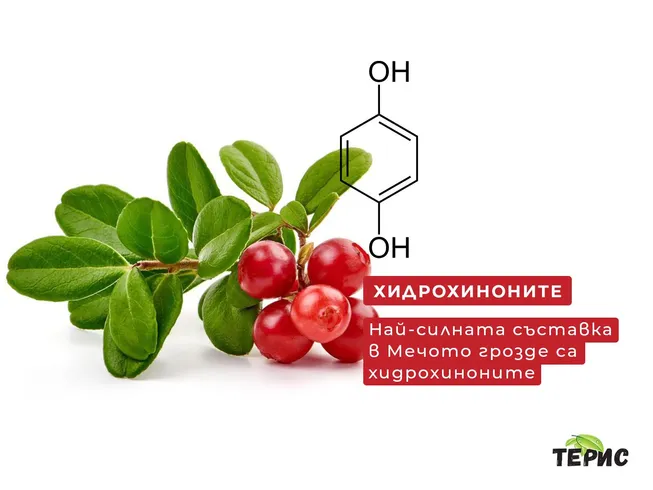
"Uva ursi" is also used topically (on the surface of the skin), because chemically it produces hydroquinone, a substance used in skin-lightening creams. Hydroquinone is prescribed to treat dark skin patches that develop as a result of skin damage.
#Uses of the bearberry plant
#Food
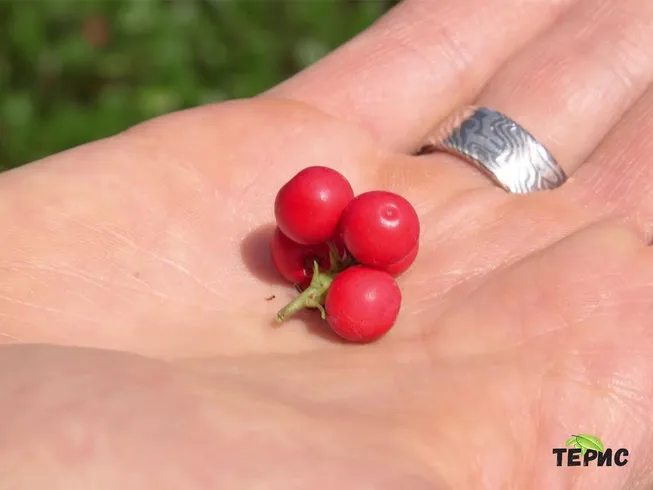
Historically, bearberry fruits and leaves were used as food by the Blackfeet community. The berries can be made into jelly, and they have also been used as a seasoning and cooked with meat.
#Dye
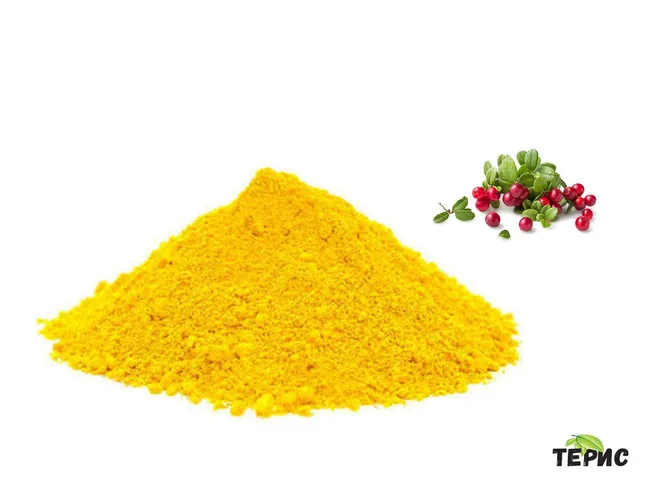
Native Americans used the plant to produce a yellow dye.
#Smoking
Dried bearberry leaves are the main component of many traditional smoking mixtures of the native peoples of North America, known collectively as "kinnikinnick" (or "smoking mixture").

#Folk medicine
Teas and extracts made from the leaves of the herb have been used in traditional medicine for centuries as urinary antiseptics, diuretics and laxatives.
#Medicinal uses of bearberry
There are several common medicinal uses of the herb.
Its most important medicinal application: the herb is beneficial for the kidneys and bladder, the prostate and reduced potency
The various symptoms and conditions that "uva ursi" is thought to help with include:
· Promoting healing;
· Soothing an upset stomach;
· Strengthening the immune system;
· Reducing inflammation;
· Detoxifying the body;
· Helping with swelling of the bladder and urethra;
· Helping with swelling of the urinary tract;
· Combating constipation;
· Treating kidney infections;
· Treating bronchitis.
#Cultivation
There are several cultivars that are propagated for use as ornamental plants. It is an attractive year-round evergreen decoration for gardens and is useful for controlling erosion thanks to its deep roots.
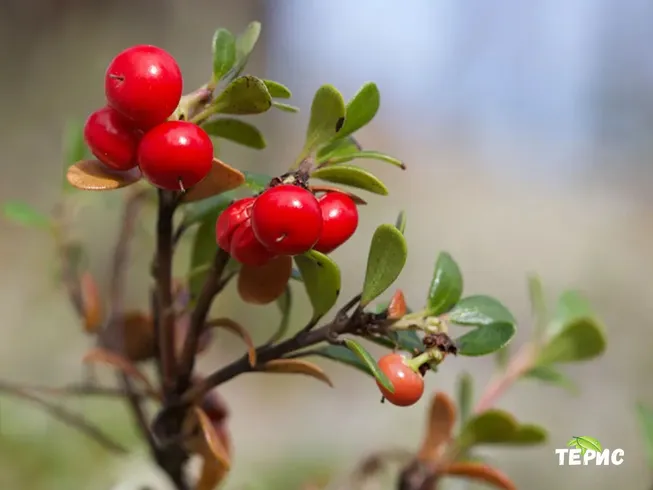
The plant tolerates sun and dry soils and is therefore a common ground cover in urban areas, naturalised areas and native plant sites or rock gardens.
#Medicinal benefits of the herb
Its constituent - the hydroquinones - fights various bacteria in our body and helps stop inflammatory processes. That is why this herb is also recommended for supporting immunity. It is also used for prostate gland problems, vaginal discharge and gout.
Extract of the herb's leaves has a long history of use in traditional Native American medicine as a diuretic and as a treatment for urinary tract infections, painful urination and kidney stones.
#Bearberry for urinary tract infections
The herb also has an effect that may help fight infection by reducing inflammation.
In herbal medicine the leaves of the plant are used to treat inflammation of the urinary tract.
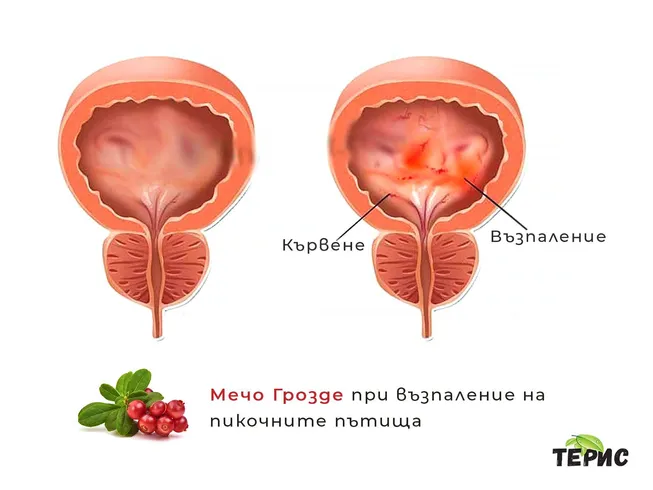
According to studies, urinary tract infections, or UTIs, affect almost half of all women at some point in their lives.
They often require antibiotic treatment. But if you get them often, you may wonder whether there is a more natural way to treat or prevent them.
"Wild cranberry" is a popular food supplement for UTIs.
"Uva ursi" works to reduce bacteria in the urine because it contains chemicals called glycosides. In the body, glycosides are converted into hydroquinone, which has antibacterial properties.
The plant is also thought to reduce inflammation through its astringent effect on the mucous membranes, but evidence from clinical research does not fully support this claim.
Its infection-fighting properties come from several natural chemicals in the plant, including arbutin and hydroquinone. It also contains tannins - a property that gives uva ursi its astringent effect.
Arbutin is the natural chemical in uva ursi mainly responsible for the benefits to the urinary tract. Once metabolised in your body, arbutin is converted into hydroquinone, which passes through your kidneys into the urinary tract.
Hydroquinone may relieve pain and inflammation in the bladder or urinary tract. It may also prevent the growth of harmful bacteria, maintaining a healthy bacterial balance.
#Bearberry for prostate problems
Because of its anti-inflammatory properties, the herb is also used for prostate gland problems.

#Bearberry for sexually transmitted diseases
The herb is also considered an astringent and a remedy for sexually transmitted diseases.
#Bearberry for vaginal discharge
Sometimes this normal symptom can turn into an imbalance of the female reproductive system caused by bacterial infections or another condition (medicines, scented soaps). The antiseptic and anti-inflammatory action of bearberry is yet another natural solution, a powerful remedy when discharge appears. The therapy can be carried out at home, provided you have first consulted a specialist doctor and follow their instructions.

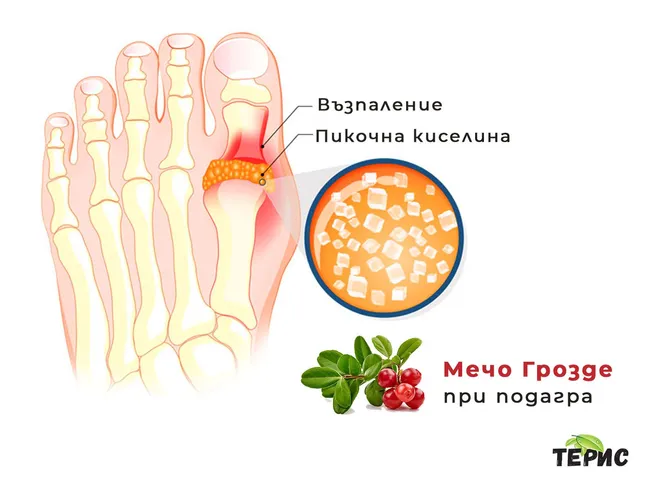
#Bearberry for gout
The bioactive elements found in bearberry leaves neutralise accumulated uric acid crystals (urate crystals) in the joints, the tissues around the joints and the kidneys, which makes the herb beneficial for gout.
#Topical use of bearberry
"Uva ursi" is also a common ingredient in some skincare products.

As a topical agent (applied to the skin), "uva ursi" was found to be effective as a skin-lightening agent in a pilot study among healthy people.
Hyperpigmentation was inhibited in four out of six study participants who were exposed to ultraviolet light after topical application of a uva ursi derivative (called arbutin).
#How to take the herb
"Uva ursi" is sold as dried leaves and powdered preparations, teas, tinctures and capsules, which are taken orally (by mouth).
Derivatives of the plant are also used in topical skin preparations.
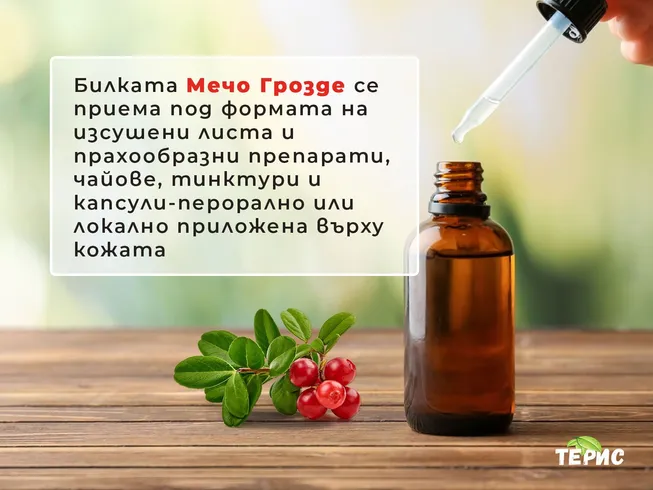
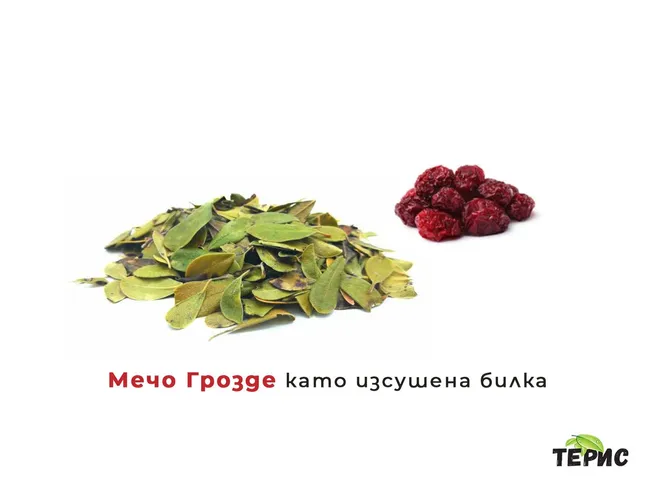
In herbal medicinal preparations only the leaves are used, not the fruit.
#As a dried herb
In this form, an intake of 2 to 4 grams a day, providing a total of 400 to 800 mg of arbutin, is the standard dose.
#As a tea
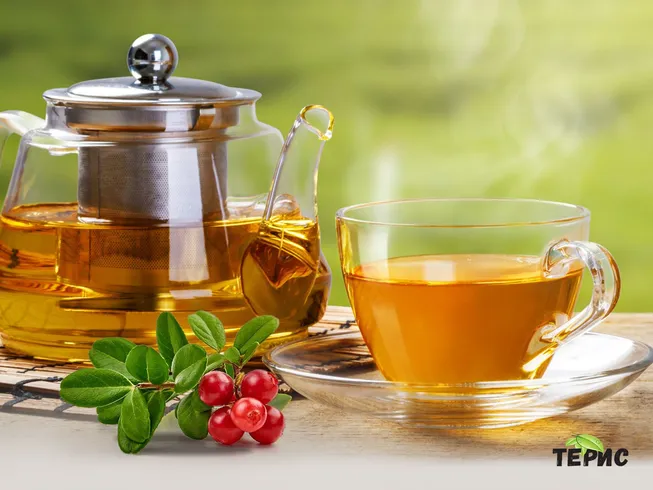
To make tea, soak 3 grams of dried leaves in water for 12 hours - then strain the tea and drink it three to four times a day.
Bear in mind that it is important to avoid taking too much of the plant. According to some sources, even 15 grams of dried uva ursi leaves can be toxic for some people.
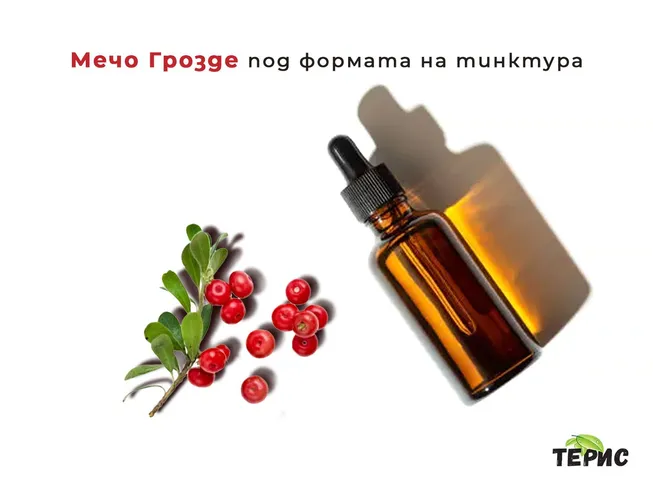
#As a tincture - herbal extract
This form is the most concentrated, and it is the one in which you can feel the beneficial action of the herb most quickly.
The recommended daily intake is 20 - 30 drops of the herbal extract dissolved in a glass of water, 2 - 3 times a day.
Contraindications:
People with liver problems, pregnant women and breastfeeding women should avoid using this herb
#Bearberry herbal tincture
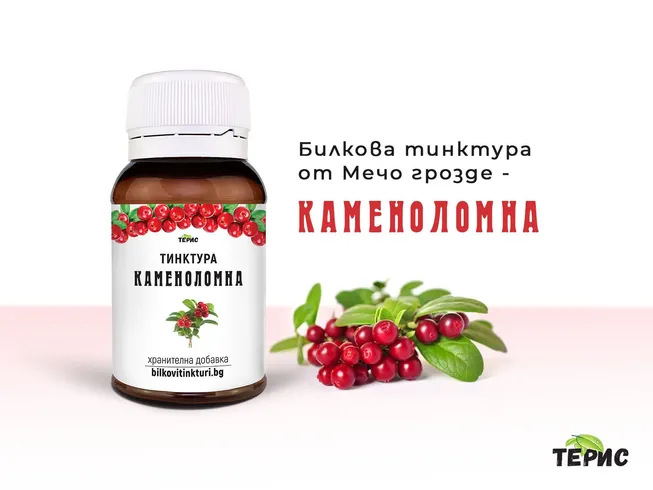
Herbal tincture KAMENOLOMNA is a concentrated herbal extract containing one of the oldest known medicinal plants - bearberry.
It has a beneficial effect on the bladder and kidneys.
It will provide your body with the maximum amount of bioactive substances.
The tincture is an aid in cases of:
• Impaired function of the urogenital system
• Bladder ulcers
• Bacterial infections
• Painful urination
• Symptoms such as blood in the urine
• Kidney stones
• Impaired liver function
Give yourself the gift of health with tincture KAMENOLOMNA and get rid of kidney and urinary tract problems.
#What other herbs are usually taken with uva ursi?
There are several herbal combinations for bladder infections. Some preliminary studies suggest that taking uva ursi with dandelion tea may help prevent UTIs.

#Safety precautions
The use of herbs is an approach respected for centuries for strengthening the body and treating illness. However, herbs can cause side effects and interact with other herbs, food supplements or medicines. For these reasons you should take herbs carefully, under the supervision of a medical professional.

One of the chemicals in uva ursi, hydroquinone, can damage the liver. You should take uva ursi only for short periods, no longer than 5 days, under the supervision of a doctor or pharmacist. You should not take a course of uva ursi more than 5 times in 1 year. Do not take more than the recommended doses!
Reported side effects are usually mild and include nausea and vomiting, irritability and insomnia.
Women who are pregnant or breastfeeding and people with high blood pressure should not take bearberry extracts. People who have Crohn's disease, digestive problems, kidney or liver disease or ulcers should not use it either.
If you are being treated with any of the following medicines and substances, you should not use uva ursi without first talking to a specialist:
Lithium. Taking bearberry may cause lithium to build up to dangerous levels in the blood.
Medicines and supplements that make the urine more acidic. These include vitamin C, cranberry juice, orange juice and other citrus fruits and juices.
Non-steroidal anti-inflammatory drugs (NSAIDs) and corticosteroids. Animal studies carried out in Japan show that uva ursi may increase the anti-inflammatory effects of these medicines, although it is not known whether the herb would have this effect in humans.
Iron. If you take iron supplements, take them at least 2 hours before or 2 hours after uva ursi.
#Possible side effects
Because of the possibility of toxicity, you should consult a health consultant before taking any dose of bearberry. Experts recommend avoiding taking the herb for more than two weeks (conservative sources recommend limiting the duration to no more than 5 days) and no more than 5 times a year.
Never take more than the recommended dose or take "uva ursi" for longer than the prescribed duration.
#Fight the bacteria in your body
Bearberry is used to treat the urinary tract and to lighten the skin. It may also have anti-inflammatory and astringent action.
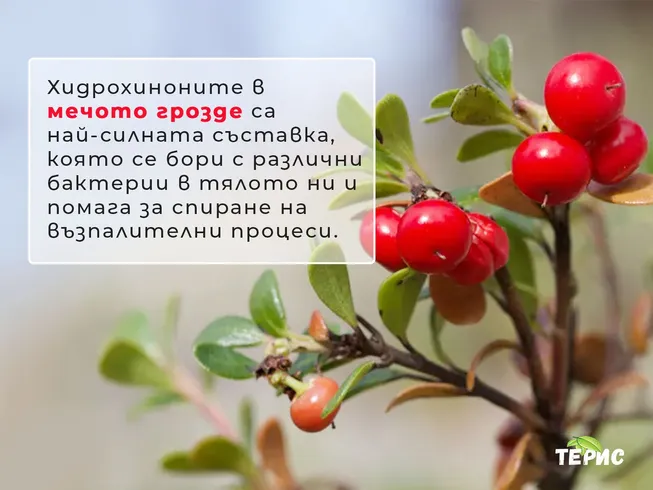
The hydroquinones in bearberry are the most powerful constituent, which fights various bacteria in our body and helps to stop inflammatory processes. That is why this herb is also recommended for supporting immunity. It is also used for prostate gland problems, vaginal discharge and gout.
When choosing "uva ursi" or any herbal supplement, look for those made with organic ingredients by companies that follow the current good manufacturing practices set by the Food and Drug Administration.
If you want to take advantage of the herb's medicinal properties, get a pure plant extract of bearberry that provides a sufficient daily dose of arbutin - such as the one contained in our herbal tincture KAMENOLOMNA.
Because health comes first, and we should take care of it in the best possible way.
This article is for educational purposes and does not replace advice from a doctor. Food supplements are not medicines and are not intended to treat diseases. If you have a chronic condition, are pregnant or breastfeeding, or take medication, consult a specialist before use.
Products from this article