Ginger - the herb of 2020
Table of Contents
#Medicinal plants - herbs
Bulgaria is among the countries in the world with the highest share of medicinal plant species relative to the total number of plant species. In this respect our country ranks alongside countries such as India and China, whose territory is many times larger.
Out of this huge variety of plants, around 270 species of herbs are gathered, and they are used in the pharmaceutical, perfume, cosmetics and food industries.
Every plant has its own unique chemical profile and helps in the treatment of various conditions or as prevention.
And while in some species all parts can be used, in others the healing and medicinal properties are found in the leaves, in others in the stems, flowers and bark, and in yet others in the root.
#Ginger - "Zingiber officinale"
It is the root of ginger - "Zingiber officinale" that has become one of the most popular plants in our country in recent years; although it does not grow in Bulgaria, it has numerous medicinal properties. It is also well known for its reputation as an aphrodisiac.
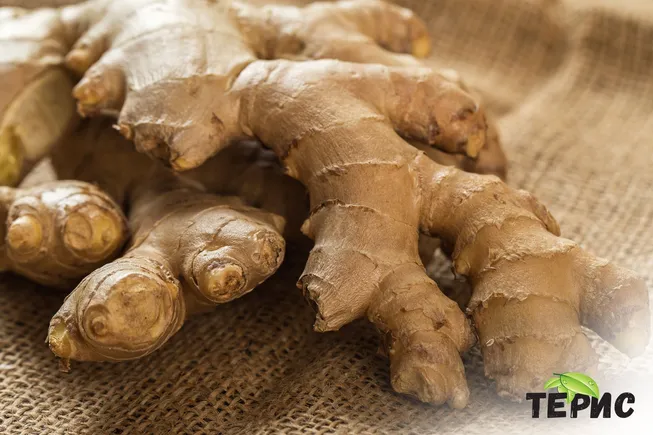 Ginger Zingiber Officinale - bilkovitinkturi.bg
#Botanical characteristics
In nature it is in fact a perennial herbaceous plant with a large rhizome, which is heavily branched. Its stems can reach one metre in height; it has leathery lance-shaped leaves and blooms with beautiful reddish flowers.
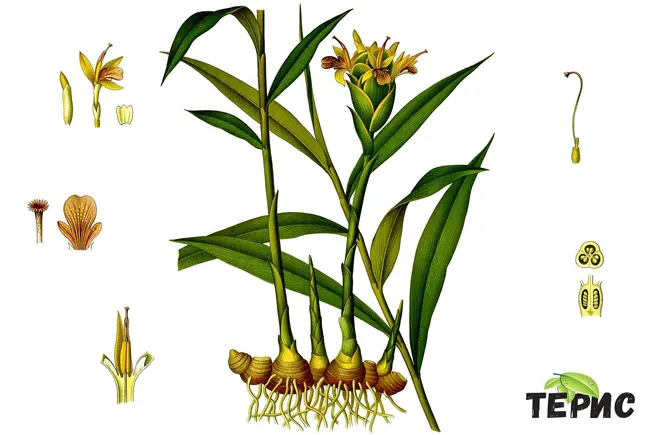 Botanical characteristics of ginger - bilkovitinkturi.bg
It is also among the healthiest (and tastiest) spices on the planet.
#Parts of the plant used
The rhizome (the underground part of the stem) is the part usually used as a medicinal supplement or spice. It is often called ginger root or simply ginger.
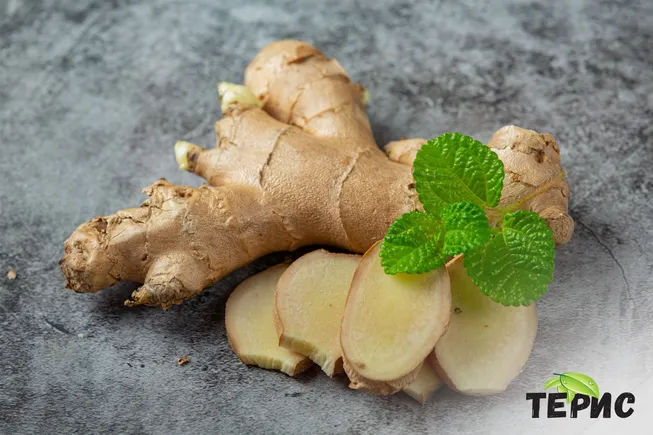 Ginger root - bilkovitinkturi.bg
#History and distribution
In Bulgarian ginger is also called "Isiot" or "Imbir", and its qualities were known as early as ancient China and India. Its homeland is East Asia, from India to China or South-East Asia. The earliest records of it are Chinese. Confucius (557 – 479 BC) mentions it in his "Analects" and is known never to have sat down to a meal without it.
According to later records the plant was brought to China from South-East Asia. Through the Arabs it reached Ancient Greece and the Roman Empire. They also took it to East Africa around the 13th century, and in the 16th century the Portuguese took it to West Africa.
At the same time the Spanish took ginger to the Americas, and by 1547 Jamaica was already exporting 1,100 tonnes of the medicinal root to Spain. Today India produces the most of this medicinal root, followed by China, West Africa, Jamaica, Thailand and Australia. It reached Europe in the 13th century thanks to Marco Polo.
The best conditions for ginger plants are the tropical regions of South Asia, because ginger needs warmth, fertile soil and moisture, as well as diffused light for 12-15 hours a day.
It is a plant of warm and humid climates, at altitudes of up to 1,500 metres.
In our latitudes growing the root is very difficult, as ginger cannot survive temperatures below zero degrees.
#Forms of use
Ginger can be used fresh, dried, powdered, as a herbal extract - a herbal tincture, as an essential oil or as juice.
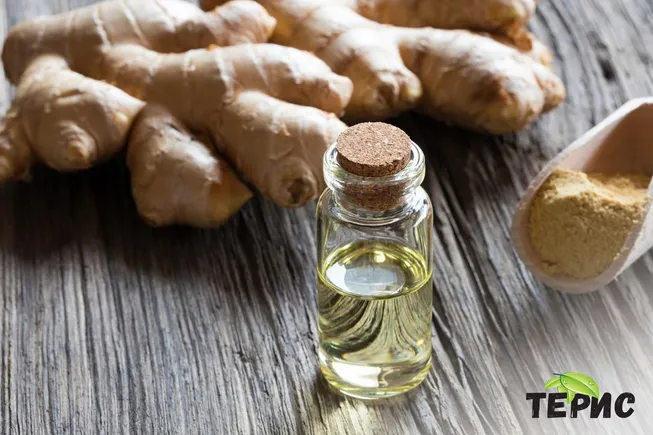 Fresh, dried, powdered ginger, ginger essential oil or juice - bilkovitinkturi.bg
Raw – chopped or grated ginger can be added to smoothies or fresh vegetable or fruit juices, in an amount no bigger than the size of your thumb.
Tea – as a warm drink it relieves digestive upsets, nausea and discomfort. It relaxes the body and has anti-inflammatory properties. The drink can also be taken cold.
Powdered – using ground ginger is a good way to take in its useful flavour and medicinal properties. It can be added to soups, cooked dishes, sauces and smoothies.
Herbal extract of ginger – contains the largest amount of beneficial gingerol.
In this form it can be used as a remedy and has the best effect. It is taken internally to treat various conditions. The recommended dose is 20-30 drops dissolved in a glass of water, 1 to 3 times a day.
#Chemical composition of the root
In terms of chemical composition, 100 g of ginger root contains:
- 80 kcal,
- 1.7 g sugar,
- 17.77 g carbohydrates
- and 2 g dietary fibre.
Its vitamin content is: vitamin B1 – 0.025 mg, riboflavin B2 – 0.034 mg, niacin B3 – 0.75 mg, pantothenic acid B5 – 0.203 mg, pyridoxine B6 – 0.16 mg, folic acid B9 – 11 μg, ascorbic acid (vitamin C) – 5 mg.
Its mineral content is: calcium 16 mg, magnesium - 43 mg, iron - 0.6 mg, manganese - 0.229 mg, phosphorus - 34 mg, potassium - 415 mg, sodium - 13 mg, zinc - 0.34 mg.
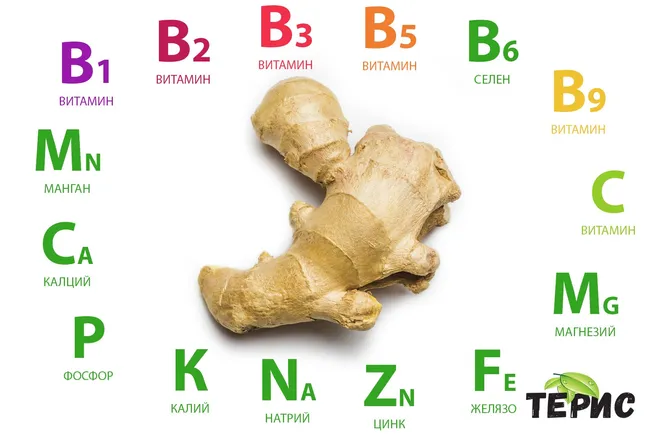 Chemical composition of 100 grams of ginger - bilkovitinkturi.bg
Originally it was used mainly in traditional medicine, but today it is used extremely widely – as a spice in the kitchen, as a tea, as an addition to soups and sauces, in confectionery in the form of preserves and sweets, as an ingredient in beer, and even as an aphrodisiac.
#Medicinal properties of ginger:
#Against seasickness in the past
The medicinal properties of ginger have been known for a long time, and at first it was used against seasickness – sailors noticed that eating the healing root spared them from discomfort and nausea.
The root has anti-inflammatory, antibacterial, antiviral and a number of other health-promoting properties.
#Improves digestion
Eating ginger may help improve digestion. It has a beneficial effect on the enzymes trypsin and pancreatic lipase, which are important for digestion.
It also helps food pass through the digestive tract, which suggests that it relieves and may prevent constipation .
 Eating ginger improves digestion - bilkovitinkturi.bg
#Relieves nausea
Perhaps the best-known property of the root is that it helps relieve nausea, because it neutralises stomach acids and supports digestion.
Ginger tea is recommended as the most common and effective remedy, but it also has a beneficial effect raw.
- between 2 and 4 g of fresh ginger root a day
- 0.25 to 1 g of powdered root
- or 1.5 to 3 g of liquid extract
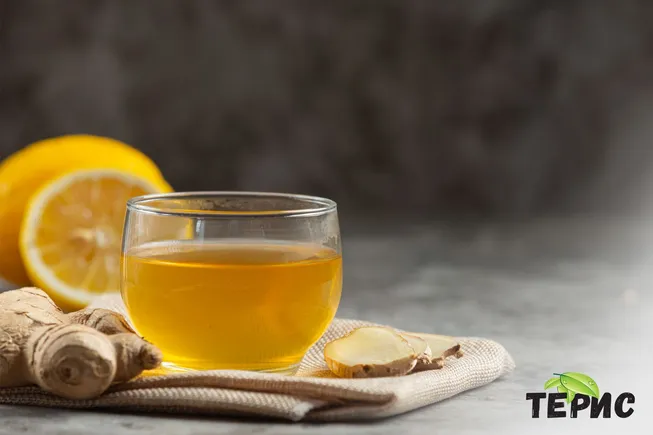 Ginger tea - bilkovitinkturi.bg
#Ginger destroys parasites
The root has powerful anthelmintic properties and destroys parasites. This action is due to its enzymes, which together with its stimulating functions make it an effective remedy against worms.
#Against colds or flu
Many people use ginger to recover from a cold or flu.
According to various studies, fresh ginger may support the respiratory system, because it stimulates the release of mucus from the bronchi, soothes a sore throat and has a strong expectorant action.
Experts recommend steeping 0.5 tsp each of powdered ginger, ground hot red pepper and turmeric in 200 ml of fresh milk and boiling it for 2 minutes. Add 1 tsp of honey and half a tsp of butter to the cooled liquid. Drink the beverage warm, 200 ml three times a day.
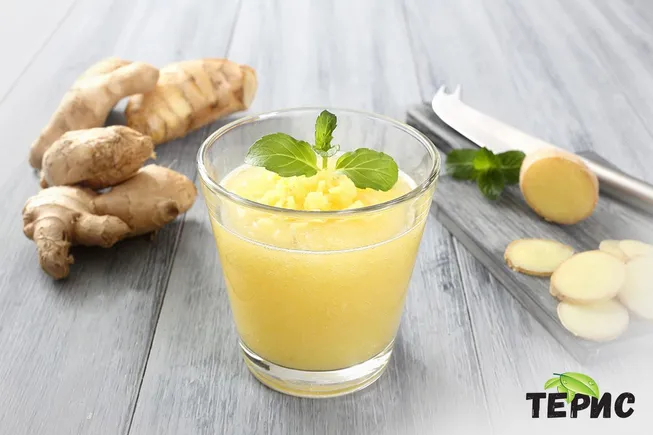 Ginger drink against colds or flu - bilkovitinkturi.bg
#Ginger reduces muscle pain
Studies have found that a daily dose of 2 grams of raw or heated ginger reduces exercise-induced muscle pain by about 25%.
#Reduces dysmenorrhoea
Ginger may help reduce dysmenorrhoea - pain just before or during menstruation.
#Has anti-inflammatory properties
The root has anti-inflammatory properties and effectively fights chronic headache. Its relieving action is due to the fact that it blocks prostaglandins, which cause inflammation.
Taking the medicinal plant may help relieve inflammation caused by osteoarthritis.
#A source of antioxidants
Ginger does not provide protein or other nutrients, but it is an excellent source of antioxidants.
Studies show that for this reason it may reduce various types of oxidative stress, which occurs when too many free radicals build up in the body - toxic substances produced by metabolism and other factors, which the body must eliminate to prevent cell damage that can lead to a number of diseases, including cancer.
As a natural antioxidant, ginger prevents the development of precancerous tumours.
It also helps people who suffer from diabetes, as it manages to protect the kidneys against diabetic nephropathy, which reduces their function.
#Against hangovers:
Early research shows that taking a combination of ginger, mandarin orange and brown sugar before drinking reduces hangover symptoms, including nausea, vomiting and diarrhoea.
#Lowers cholesterol
Ginger is also recommended for people with high levels of cholesterol or other fats (lipids) in the blood (hyperlipidaemia).
*Studies show that taking 1 gram of ginger three times a day for 45 days lowers triglyceride and cholesterol levels in people with high cholesterol.
#Lowers blood pressure
Drinking black tea with ginger may lower blood pressure by a small amount in people with diabetes and high blood pressure.
#May prevent liver damage
Some drugs used to treat tuberculosis can cause liver damage. Taking ginger together with these drugs may help prevent liver damage in some people.
#Ginger extract
There is evidence that ginger extract may help with cardiovascular disease.
Ginger brings down high blood pressure and raises low blood pressure.
By balancing this problem well, the rhizome prevents platelets from sticking together and forming dangerous blood clots, which lead to blocked arteries, heart attacks and thrombophlebitis.
Ginger root:
- has a detoxifying action
- boosts metabolism
- has a warming action
- supports normal kidney function and even has the property of breaking up kidney stones
- helps remove deposits
- improves liver function
- and boosts circulation
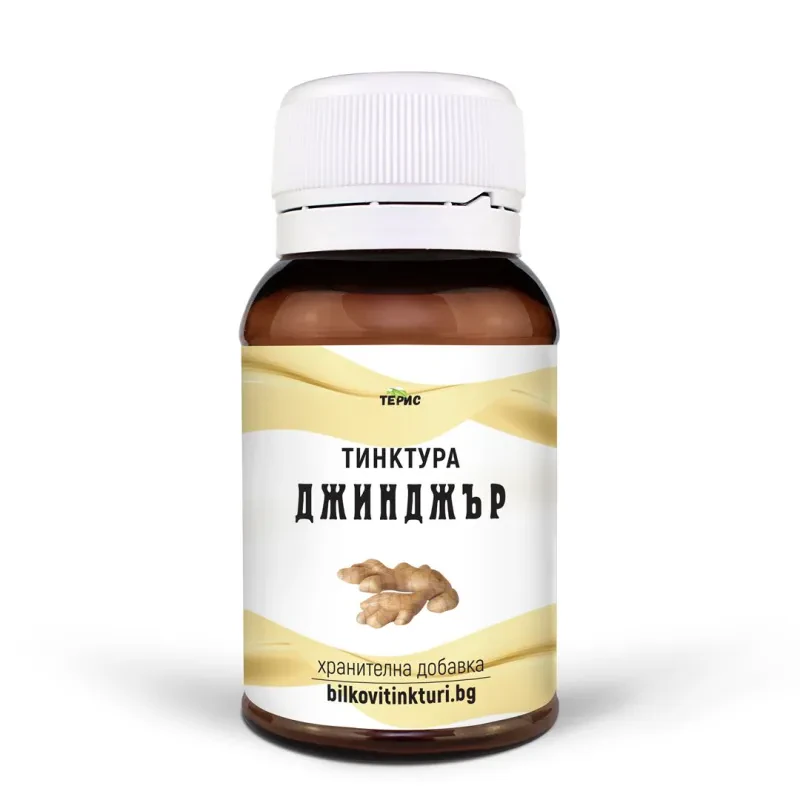
#Ginger herbal tincture "DZHINDZHAR".
The ginger herbal tincture "DZHINDZHAR" :
- successfully tackles digestive problems
- helps with vomiting caused by motion sickness or morning sickness, and also with diarrhoea.
- has an anti-inflammatory action
- helps with arthritis, muscle cramps and rheumatism
- cleanses the body (mostly the intestines and kidneys) of accumulated toxins
- stimulates blood circulation
- nourishes the skin
It is used in the treatment of asthma, bronchitis and other respiratory problems, as it helps expel mucus from the lungs.
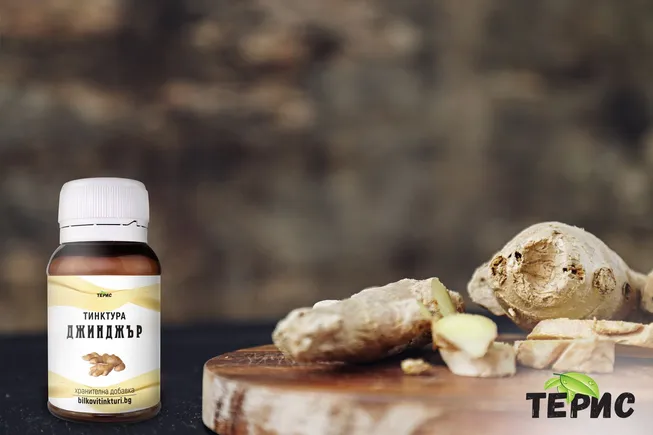 Ginger tincture Dzhindzhar - bilkovitinkturi.bg
#How to choose and store it
Whenever possible, choose fresh ginger over the dried form of the spice, as it not only tastes better but also contains higher levels of gingerol, as well as ginger's active protease (an anti-inflammatory compound).
*When buying fresh ginger root, choose one that is firm, smooth and free of mould.
Ginger can also be found powdered, candied and pickled.
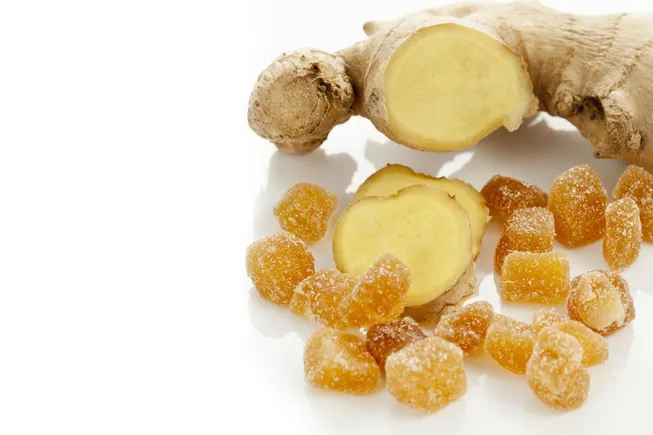 Candied ginger - bilkovitinkturi.bg
*Fresh ginger can be kept in the fridge for up to three weeks if left unpeeled. Stored unpeeled in the freezer, it will keep for up to six months.
To remove the skin from fresh ginger root, peel it with a knife or scrape it with a spoon. The ginger can then be sliced or ground. Added at the beginning of cooking it gives a subtler flavour, while added towards the end it gives a sharper taste.
#How to eat it
Besides tea, you can add chopped ginger root mixed with honey to a little almond milk with turmeric to make golden milk.
To stimulate metabolism, mix freshly grated ginger root, lemon juice, honey and water.
 Ginger to stimulate metabolism - bilkovitinkturi.bg
A combination of ginger root, soy sauce , olive oil and garlic makes a wonderful salad dressing.
Grated ginger root is a healthy addition to the filling for baked apples.
To season healthy sautéed vegetables, add freshly ground ginger root.
#Not just a root, but one of the most useful plants
Even if at first glance ginger seems to be just an ordinary, unremarkable root, this herb is definitely a candidate for "one of the most useful herbs" as far as its flavour and medicinal qualities are concerned.
#GINGER - THE HERB OF 2020? ➤ VIDEO
This article is for educational purposes and does not replace advice from a doctor. Food supplements are not medicines and are not intended to treat diseases. If you have a chronic condition, are pregnant or breastfeeding, or take medication, consult a specialist before use.

Ginger - the herb of 2020
Click to play video