Enyovden - The Feast of Medicinal Herbs
Table of Contents
The night before 24 June is regarded as a night of health, well-being, luck, love and mysteries. All the folk rituals connected with the feast bring prosperity and well-being.
#The night of health, well-being, luck and love
One of the most beautiful Bulgarian summer feasts – Enyovden – is celebrated on 24 June. It is a feast linked to the summer solstice, to family happiness, to love and, above all, to the mystery of nature and the healing power of herbs.
It is known for the fact that on the night before it, the largest herb gathering of the yeartakes place, because at that time herbs acquire great healing power, which disappears with the sunrise.
#Enyovden morning - herbs have the greatest power
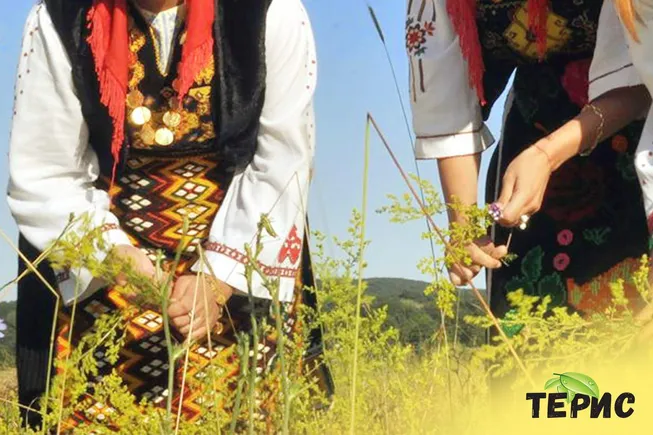
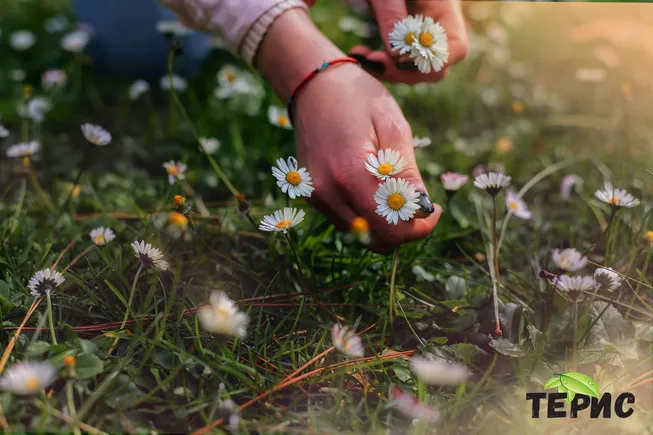
Folk healers believe that herbs and grasses picked early on Enyovden morning have the greatest healing power. At that time they are at their purest, most beneficial and most suitable for healing. In addition, according to folk belief, on this day every divination comes true and every spell takes hold.
 Herbs on Enyovden are picked early in the morning
#The custom surrounding the picking of herbs
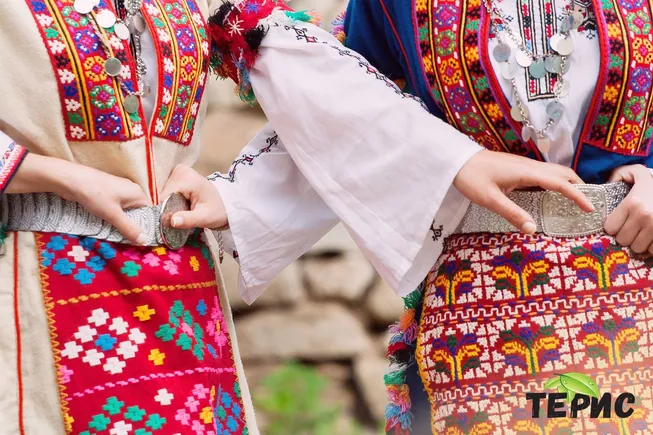
Herbs are picked on the night before Enyovden, because it is believed that they have the greatest power at that time. Herbs are picked during the night because it is believed that after sunrise they lose their healing abilities. The picking is done according to a special custom called “buying back” the grasses from the samodivi (woodland fairies): the grandmothers arrange in a circle the cloth strainers in which the medicinal herbs have been gathered and dance around them the so-called “closed horo” . This horo (round dance) is danced in complete silence.
 The closed horo - an Enyovden custom
#The herb enyovche (lady's bedstraw)
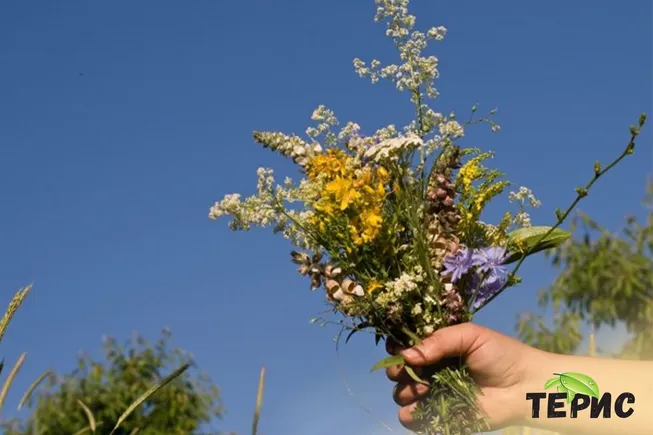
From the herbs gathered, the first and foremost among them being enyovche (lady's bedstraw), the women make posies, which they tie with red thread. In some regions there is a custom of making posies with as many herbs as there are members of the family. Once the posies are made, each is dedicated to someone and they are left outside overnight. In the morning the posies are used to foretell the health, over the coming year, of the person to whom each is dedicated. The women place the posies in various places in their homes and use them throughout the year to treat the sick, or use the water in which the posies have stood.
 Women make posies of lady's bedstraw
According to folk beliefs, there are seventy-seven and a half human diseases: there is a cure for seventy-seven, but not for the half. It is believed, however, that there is also a herb for the half disease, but only certain herbalists can find and use it.
#The maiden's posy of herbs
Young unmarried women also pick herbs on the night before Enyovden. The maiden's posy is made of seven, nine or twelve herbs and has the power to attract and enchant the maiden's chosen one. Many of the traditions connected with Enyovden are devoted precisely to love, marriage, family happiness and children.
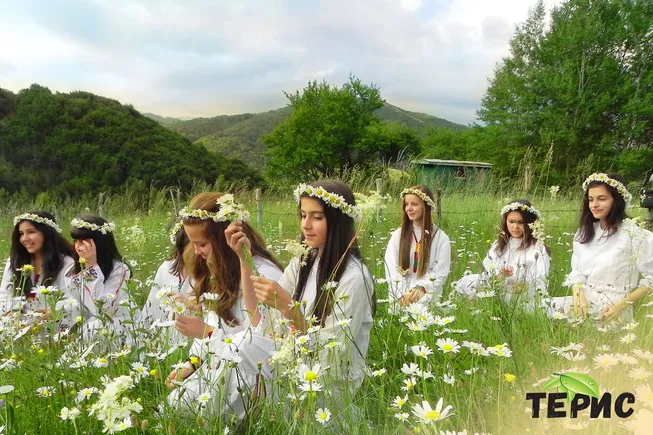 Maidens in folk costume picking herbs
#On the night of Enyovden, herbal decoctions are at their most healing
On the night before Enyovden, herbalists and sorcerers prepare their remedies in a new earthenware vessel that has never been used before. Also, according to folk belief, love herbs are boiled in an abandoned house at the edge of the village. It is believed that the water must come to the boil gradually over a slow fire, which must be lit with dry stems of the plant elecampane. This is because it is believed that elecampane adds its power to that of the boiling herbs. According to folk beliefs, these herbs are used to treat childless women, drive away evil spirits and cast love and hate spells.
PHOTO: On the night of Enyovden, herbal decoctions are at their most healing (someone stirring a herbal decoction)
#The custom - ”Enyova bulya” (Enyo's bride)
A typical Thracian custom connected with this day is “Enyova bulya” or “Enya”. To perform it, all the maidens gather at the home of one of them, where they dress a 5-6-year-old little girl whose parents are both living as a bride. The child is veiled in a red veil, and a wreath of lady's bedstraw and other flowers is placed on her head.
Enyova bulya is carried around the village, the fields, the gardens, the wells and the fountains by a bigger girl. During the ritual procession the child bride waves the long sleeves of the shirt she is dressed in, while the maidens sing special ritual songs and pray to St Enyo for health and fertility.
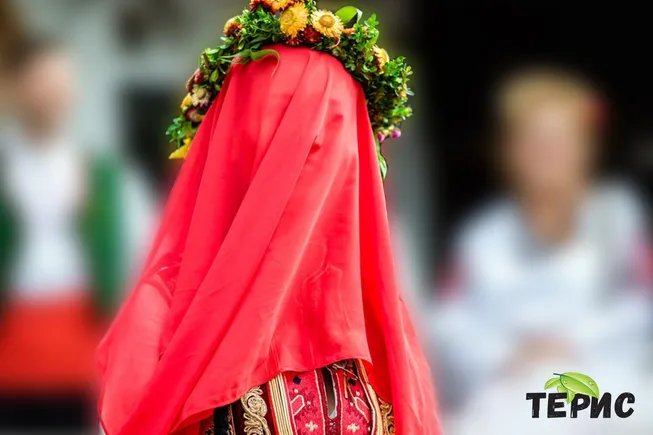 Enyova bulya is a little girl veiled in a red veil
It is believed that if the child walks barefoot over the herbs picked that morning and spread out to dry, they acquire even greater healing power.
After the procession, Enyova bulya is brought back to the same house where she was dressed.
It is there that the second ritual element begins, consisting of soaking the posies and sprinkling the maidens. The posies are tied with threads of different colours so that they can be recognised.
The posies are added to a small cauldron containing oats, which is covered with a red apron and left for one night under the stars, usually placed under a red rose bush in the yard.
In the morning Enya, or Enyova bulya as she is also called, begins taking out the posies one by one, while the maidens sing, foretelling for each of them what kind of young man she will marry. These song verses describe the young man's physical appearance, wealth and trade. The custom ends with Enyova bulya being washed with the water from the cauldron, dressed in new clothes and returned to her mother.
It is believed that if a maiden takes oat grains from the vessel and puts them under her pillow in the evening, she will marry the young man she dreams of.
#The customs on the night before Enyovden
#About sorcerers and night wanderers
There is also a belief that on the night before Enyovden, sorcerers and night wanderers, also called zhitomamtsi (grain stealers), go out to steal the fertility of other people's fields.
Dressed only in a white undershirt or naked, riding the beam of a weaving loom or dragging an apron behind them, they roam other people's fields, uttering incantations and gathering the dew from the fields. They believe that if they knead a round loaf with the dew and place it in their granary, they have bewitched the other people's harvest.
In other cases, the sorceress walks around the field three times and plucks the double ears of wheat, called the king or mother of the field, which at threshing time she throws onto her own threshing floor in the belief that the wheat will double. If a sorceress is caught on Enyovden, she is led naked to the village square, where she is publicly rebuked and cursed by the whole village.
#About sun shadows
Again on Enyovden, early in the morning, everyone goes up onto the high hills to watch the sunrise, because it is believed that the sun “dances” or “quivers” as it rises. They look at their shadows cast by the sun, and if they are whole, they believe they will be healthy throughout the year.
#An Enyovden wreath for health and longevity
According to belief, on this day “even the sun bathes”, so young and old roll in the dewy meadows, wash and bathe in the forest streams and rivers. Maidens, women, fortune-tellers, folk healers and sorceresses gather herbs and flowers from which they make a large Enyovden wreath, into which are woven seventy-seven and a half healing, magical, love and parting herbs, as many as there are human diseases.
Everyone passes through this wreath three times for health and longevity. The wreath is kept until the following year, and its herbs are used to treat sick animals and people.
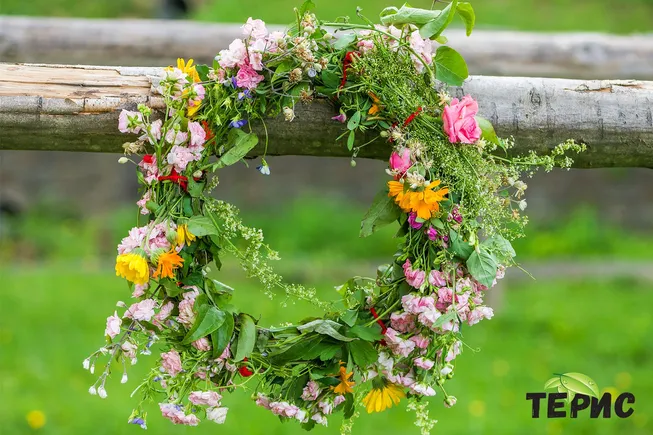 An Enyovden wreath for health and longevity
#Laduvane - singing over posies and rings
On Enyovden the custom of singing over posies and rings is also performed, which is again connected with love, marriage and long family happiness. This tradition is also linked to other Bulgarian feasts and customs such as Gergyovden (St George's Day) and laduvane.
#Name days on this day
Besides water, healing herbs play a leading role in the celebration of this day. In this respect, in the folk calendar Enyovden is above all a feast of herbs.
On the same date the Eastern Orthodox Church celebrates the Nativity of St John the Baptist. This allows the church calendar to be synchronised with folk traditions and feasts. That is why many name days are celebrated on Enyovden.
People with the following names have a reason to treat others on this date: Bilyana, Ivet, Iveta, Denislav, Denitsa, Deyan, Deyana, Diana, Diyana, Encho, Enyo, Yana, Yanaki, Yane, Yaneta, Yani, Yanizar, Yanizara, Yanimir, Yanimira, Yanin, Yanina, Yanis, Yanisa, Yanislav, Yanislava, Yanita, Yanitsa, Yanka, Yanko, Yancho.
People with names of herbs also have a name day, although they also celebrate their name day on Tsvetnitsa (Palm Sunday), such as Bozhur, Bozhura, Breza, Varba, Detelina, Detelin, Dilyana, Dilyan, Nevena, Neven, Roza and others.
Besides all those celebrating their name day, on 24 June pharmacists, phytotherapists, herbalists and healers celebrate, as the heirs of the folk healers of old.
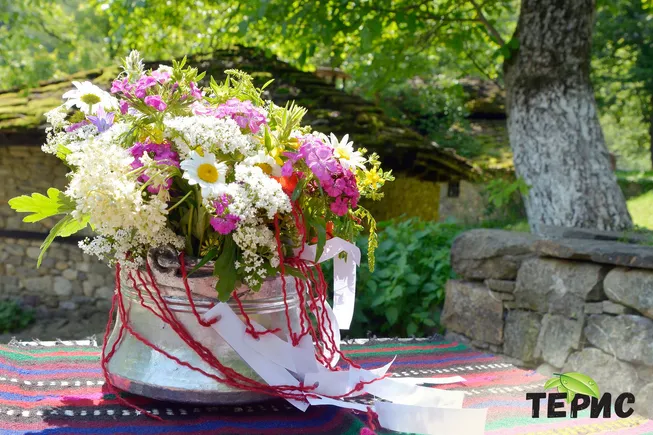 Laduvane
#The folk feast of herbs
On this longest feast of the folk calendar, according to folk belief, the sun unfolds its full power and then slowly begins “to die”, and the days begin to shorten. That is why most of the rituals are performed before sunrise.
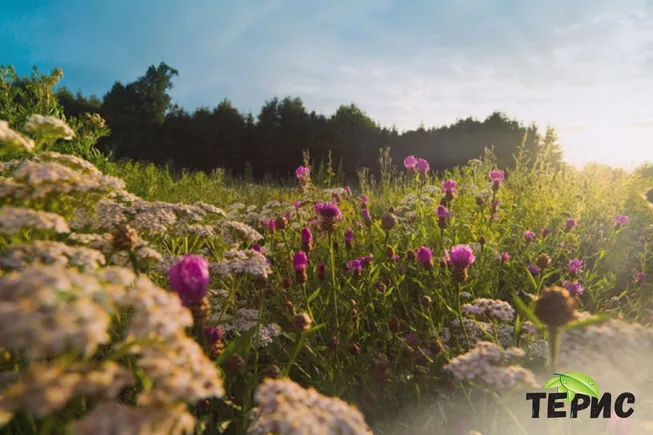 Enyovden rituals before sunrise
On Enyovden the stars come down to earth and cast healing spells on the herbs to make them more potent, even though their power is already boundless. Nature is the best thing for our health. All the folk rituals connected with the feast bring prosperity and well-being! On this day we should all celebrate.
#ENYOVDEN - THE FEAST OF MEDICINAL HERBS ➤ VIDEO
This article is for educational purposes and does not replace advice from a doctor. Food supplements are not medicines and are not intended to treat diseases. If you have a chronic condition, are pregnant or breastfeeding, or take medication, consult a specialist before use.
Enyovden - The Feast of Medicinal Herbs
Click to play video