Dwarf Elder – the Traditional Herb for a Strong Body
Table of Contents
#Medicinal herbs
Medicinal herbs have been an integral part of almost all traditional and non-traditional schools of medicine for thousands of years. Throughout the long history of herbal medicine, the effect and clinical uses of medicinal plants have been demonstrated many times among different peoples and in different historical periods.
Today phytotherapy is regarded as a complementary part of alternative medicine and can be a useful part of the treatment of various diseases.
One of the plants that is highly valued and sought after for its countless benefits and qualities is dwarf elder.
#History of the herb dwarf elder
Dwarf elder, whose Latin name is "Sambucus ebulus", has been renowned since ancient times as one of the most healing herbs. To this day it is used to treat a number of ailments. It can be found in various parts of the world, but it originates from Southern and Central Europe and South-West Asia. It also occurs in parts of North America.
Dwarf elder has an interesting origin to its name. In fact, the name "Sambucus" already appears in the written works of Hippocrates and later of Dioscorides. The name is thought to come from Greek and to be linked to a term for an ancient musical instrument (or a group of such instruments). It is very likely that the instrument in question was made from elder wood, which is notably "fairly" strong.
In this sense, besides being used to treat the body, it also "healed" the soul.
So in different languages it means the same thing in translation but sounds different - danewort, dwarf elder (English); buzina travyanistaya (Russian); Zwerg-Holunder (German); yèble, petit sureau (French).
In Bulgaria, too, it has several names - trevist baz, bazovlyak, bazunyak, nisko baze.
#When and where it grows
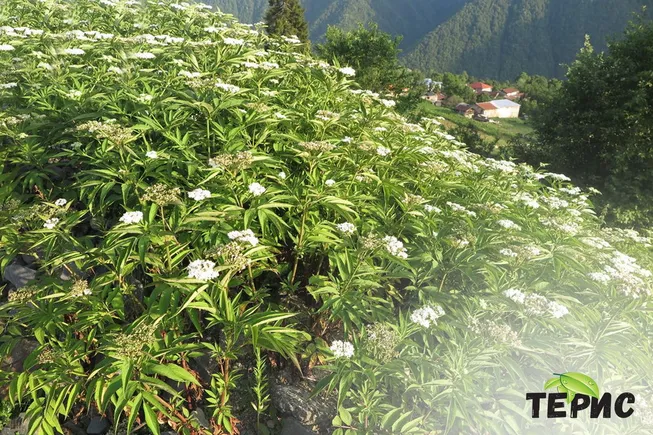
Dwarf elder is a plant that also thrives in Bulgaria and grows as a weed in fields, woods and thickets. It is usually found along rivers and roads, on plains with sufficient moisture, at altitudes of up to 1,900 metres. It has been found to do well on calcareous soils.
In general, the herb forms a not very dense but, in return, wide mass of vegetation. It spreads quickly.
The plant belongs to the so-called genus "Sambucus", which includes more than 30 species and has long been used in the healing practices of various peoples.
#Botanical characteristics
Dwarf elder grows to a height of 1–2 metres. This herbaceous perennial is distinguished by a long, creeping, strongly branched rhizome. The plant is furrowed, branched in its upper part, with a soft white pith.
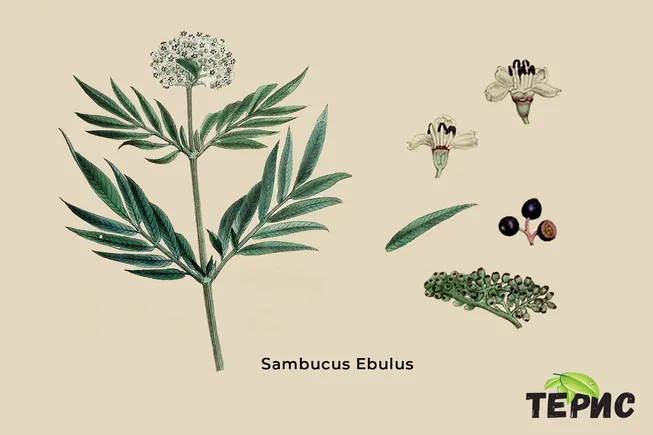
The leaves are opposite and odd-pinnate, with 5–13 oblong to oblong-pointed leaflets.
The flowers of dwarf elder are white, five-parted, with a bell-shaped corolla, occasionally pink on the outside, gathered in corymb-like inflorescences.
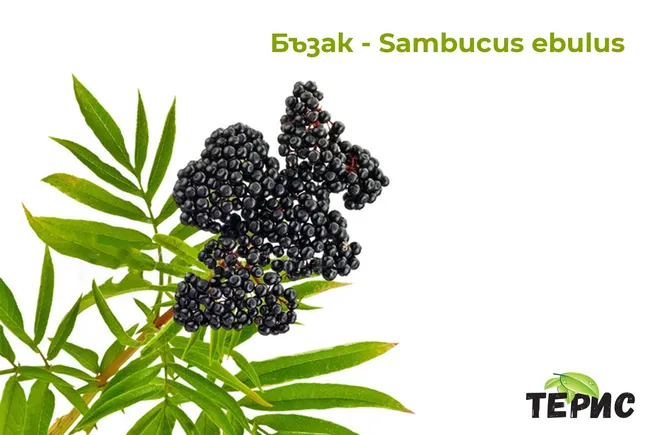
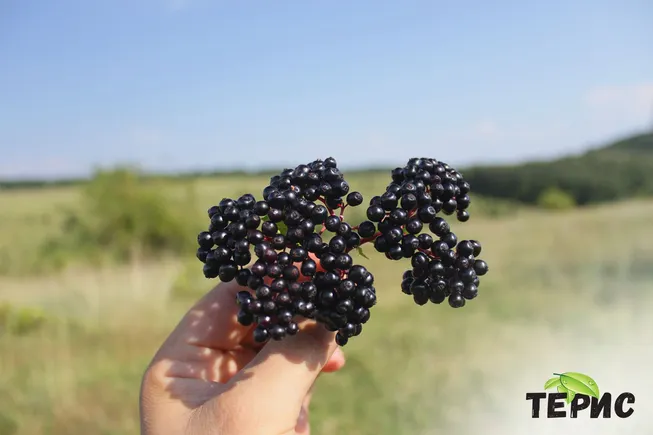
The fruit is spherical, 5–6 mm in diameter. It is dark blue to black-violet in colour and juicy, with 3 stones.
Its fruit is also called the "black berry".
#The difference between elder and dwarf elder
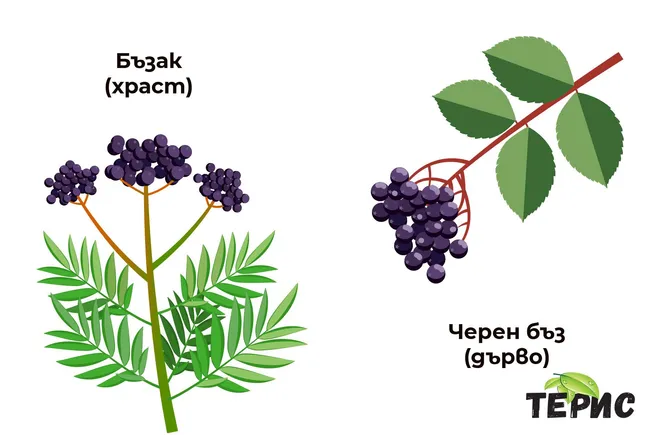
#Dwarf elder is a shrub-like plant
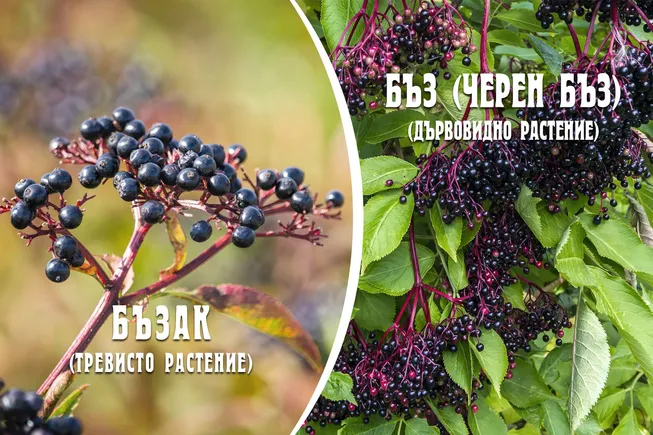
- about 1 to 2 metres tall. Its fruits sit on upright stalks (pointing upwards), and its leaves are long, narrow and opposite. Its fruits are used to make a syrup for the immune system and to obtain a herbal extract - a herbal tincture that helps activate the immune system and helps get rid of worms
#Elder, on the other hand, is a tree species
- about 3–4 metres tall, and its flowers are used for tea or a syrup for colds.
The fruits of elder (black elder) droop and point towards the ground, and its leaves are short and broad, which is how they can be told apart from dwarf elder when the elder tree is young and 1 m tall.
#Its use in herbalism
As regards its use
in herbalism, it is usually the fruit that is taken
(Fructus Ebuli) and the root (Radix Ebuli). The flowers are used less often.
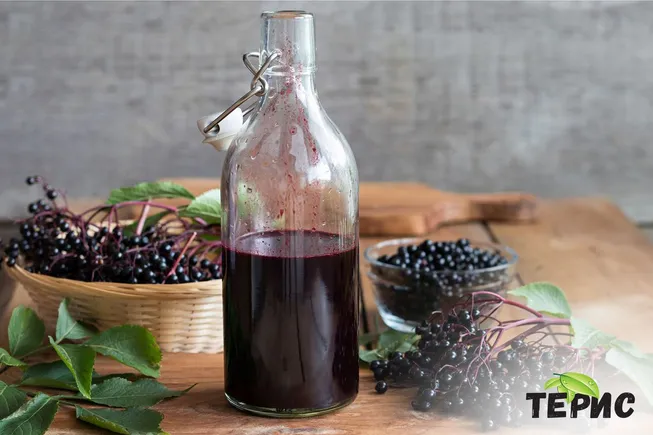
*It is important to note that members of the genus Sambucus (elder) have leaves and stems that are toxic to a greater or lesser degree.
That is why it is important that they are processed by specialists, that their use is monitored and that certain rules are followed!
#Bioactive constituents of the plant
The phytochemical compounds of dwarf elder have been studied thoroughly.
Its content of:
- sugars,
- fibre,
- vitamins
- and minerals
gives the plant its high nutritional value.
Secondary metabolites such as anthocyanins, phytosterols, flavonoids, phenols, triterpenes, tannins, iridoid glycosides (as volatile substances), chlorogenic acid, ursolic acid and lectins are a distinctive part of the plant.
In the roots of dwarf elder a number of bitter substances have been identified. These include saponins and tannins, tanning substances, and anti-carcinogenic substances.
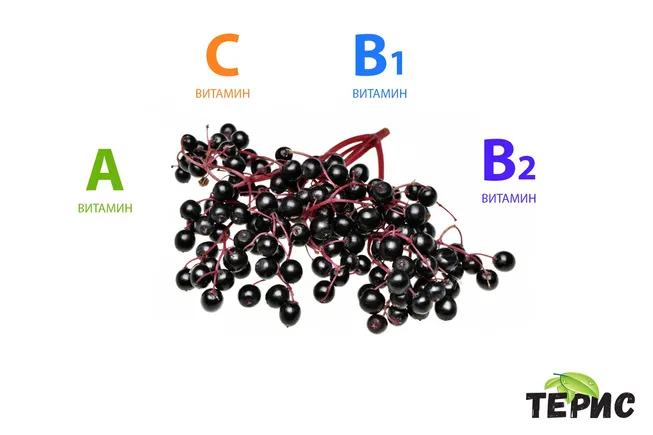
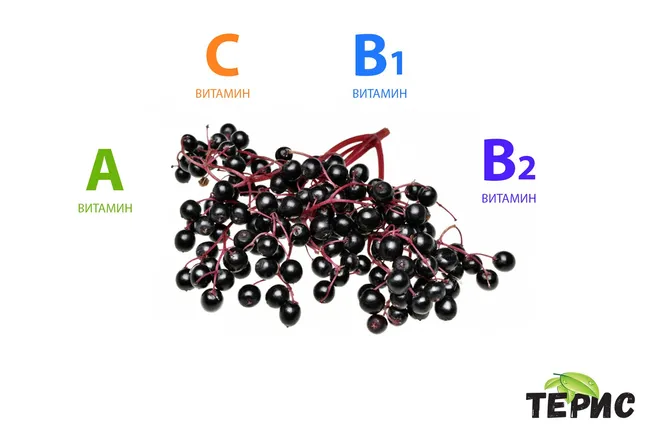
The flowers of the plant are rich in essential oils, flavonoids, a cyanogenic glycoside and sugars, while its fruits are rich in anthocyanin pigments, sugars, essential oils, resins, valeric acid, malic acid, bitter substances, tartaric acid, tanning substances, pectin and vitamins C, B1 and B2.
The seeds of dwarf elder are rich in valuable acids such as alpha-linolenic and linoleic acid, oleic and palmitic acid as the main polyunsaturated fatty acids.
Among the valuable constituents of dwarf elder there are also: steroids, caffeic acid derivatives, tannins, glycosides, cardiac glycosides, ebulitins, ebulin 1 and volatile substances, caffeic acid derivatives and phenols.
#Nutritional value:
100 grams of fresh fruit contain:
- 73 calories
- 18.4 grams of carbohydrates
- and less than 1 gram of fat and protein
Dwarf elder has:
- a high content of vitamin C (about 60% of the recommended daily intake);
- dietary fibre (7 grams of fibre per 100 grams of fresh fruit);
- phenolic acids (powerful antioxidants that can help reduce damage from oxidative stress in the body);
- it is rich in flavonols
#Traditional and medicinal properties of dwarf elder around the world
For 5,000 years Italy and France have used the fruits of dwarf elder as food and medicine.
To treat various ailments such as
- rheumatoid arthritis,
- fever,
- infections,
- bites
- and sore throat
different parts of the plant are used.
Dwarf elder is popular in traditional Persian medicine as Khaman and Palem. There it is recommended as an analgesic for various
- bone and joint problems, but it is especially valued for joint pain, fractures and sprains.
In addition, it is considered healing
- for diseases of the uterus,
- burns,
- gout,
- dental problems,
- swellings,
- fistulas
- and bites
In Iranian medicine dwarf elder is valued
- for arthritis problems,
- sore throat
- and bee stings.
It is also recommended as a
- diuretic
- and a cleansing agent
It eliminates toxins from the body through the urine and also through sweat, by increasing the activity of the sweat glands. It also increases the secretion of the mammary glands in breastfeeding women.
In Turkey dwarf elder is known as Hekimana. There it is used for:
- rheumatic pain,
- abscesses,
- wounds,
- sunstroke,
- snake bites,
- swellings,
- colds,
- eczema,
- high temperature,
- internally as a cleansing and diuretic agent,
- as well as for excessive sweating.
It also helps
- with haemorrhoids
- and stomach pain
A compress made in Turkey
- for the quick healing of wounds
is prepared with fresh leaves before the fruits ripen. They are gathered and boiled in milk for 20 minutes.
But above all it is known for being very good for the immune system.
#Recognised - the best natural immunostimulant
Recognised as the best natural immunostimulant!
- the fruits of dwarf elder are a preferred remedy for treating respiratory and gastrointestinal diseases.
It is also used for swellings and as a powerful anti-cancer agent. It also helps
- in treating inflammation,
- gastrointestinal diseases,
- flu,
- kidney
- and lung diseases,
- rheumatoid arthritis,
- as well as wounds,
- snake and insect bites
The herb can be used in various forms, but in traditional medicine it is most often found in the form of syrups, tea, herbal tincture and jams.
#In the form of tea:
As a tea dwarf elder is usually used for:
- tuberculosis,
- haemorrhoids
- and intestinal upsets
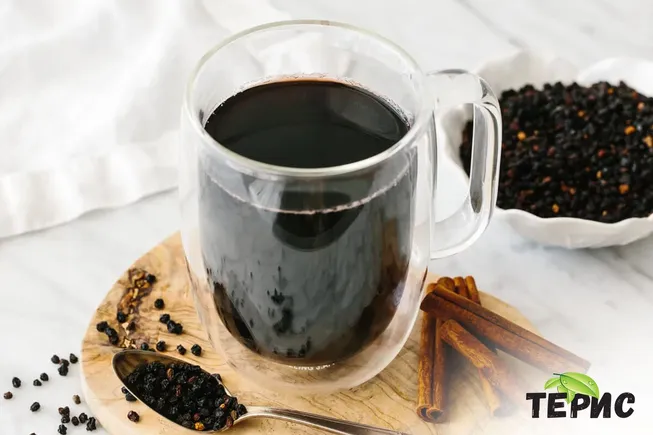
#Fruits
The fruits of dwarf elder are used mainly for concentrated herbal extracts (herbal tinctures)
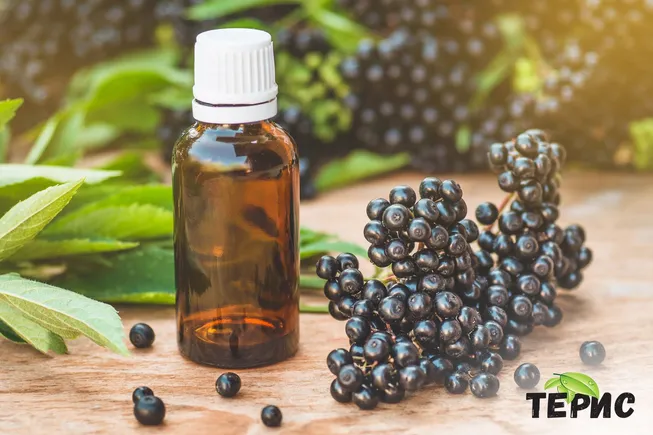
The fruits, rhizomes and less often the flowers are popular, though less so, mainly because of their diuretic, antiseptic, tonic and cleansing agents.
A popular remedy in traditional medicine
- for respiratory diseases
- and for fever
is the little fruits of dwarf elder.
#The leaves
The leaves act as:
- an anti-inflammatory,
- a choleretic,
- a diaphoretic (increases the secretion of sweat),
- a diuretic,
- an expectorant
- and a laxative agent.
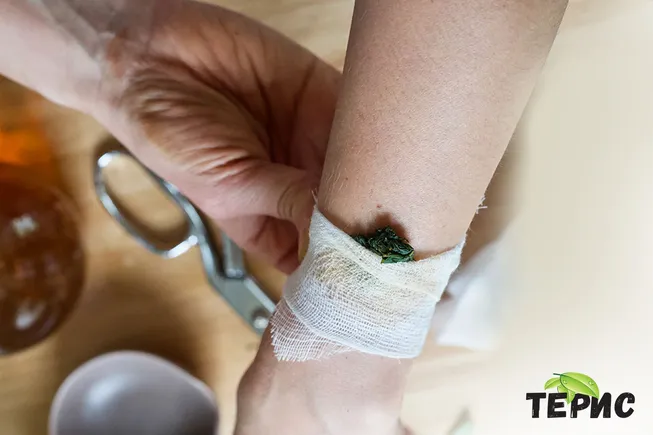
When crushed and placed on boils and burns, they have a healing effect. They can be prepared as a compress to treat swellings and bruises.
#The root
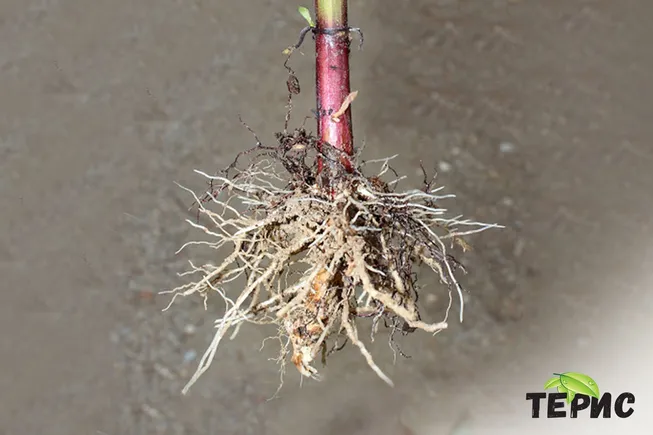
The root has:
- a diaphoretic,
- mildly diuretic
- and cleansing effect
Dried, then ground to a powder and made into a tea, it is considered one of the best remedies for oedema and hydrops (accumulation of fluid in tissues or organs). However, it should only be used by an experienced person.
Dwarf elder is believed to have a sedative effect and to help
- lower blood pressure briefly and moderately (without affecting cardiac activity)
#Diseases and conditions for which dwarf elder is used
The herb has an extremely broad spectrum and is a valuable helper for:
- liver and kidney diseases,
- heart failure;
- anaemia;
- exhaustion
It is also used for:
- difficulty urinating,
- sweating,
- cystitis,
- osteoarthritis,
- metabolic disorders,
- various types of dermatitis
It is also considered a helper in cases of cancer, and even for bites from snakes and insects, etc.
Dwarf elder also helps in:
- cases of catarrh of the upper respiratory tract,
- neuralgia,
- urticaria
- and gout
But above all - a strong immunostimulant!
#How to use it
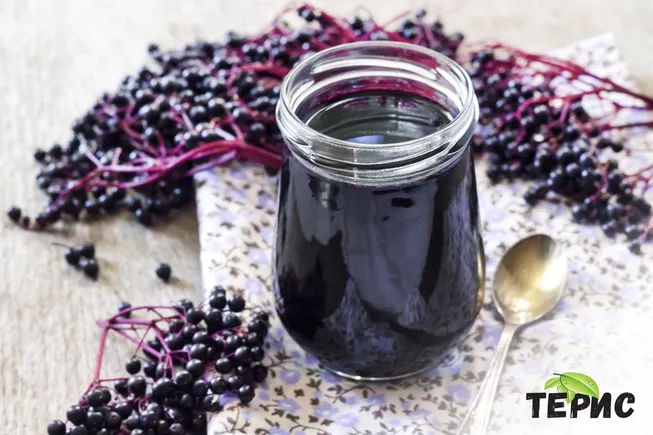
- Dwarf elder syrup
One of the best-known recipes with dwarf elder is syrup. To make it, large glass jars are used. In them you place 1 layer (3–4 cm) of well-ripened dwarf elder berries, 3–4 cm of sugar (or honey), then berries again, then honey again. Continue until the jar is filled (but not to the top); the very top must be covered with a thick layer of sugar. Cover the mouth of the jar with gauze and leave it in a dark place. Stir once a day with a wooden spoon. Leave it to stand for 40 days.
After that the mixture should be strained and the resulting syrup stored in dark glass bottles in the fridge. The berries can also be eaten, no more than 1 tablespoon a day. The syrup is taken every morning on an empty stomach, 1 tablespoon at a time, from autumn to spring. For children the dose is 1 teaspoon.
- Jam from dried berries.
This natural product is made from pressed, well-ripened berries. The squeezed juice is thickened over a low heat. Sugar, water and fruit are mixed in a 1:1:1 ratio and poured hot into small jars. Half to 1 teaspoon of this valuable fruit product is taken on an empty stomach three times a day. This jam is particularly beneficial for haemorrhoids and tuberculosis, and it is also an effective purgative.
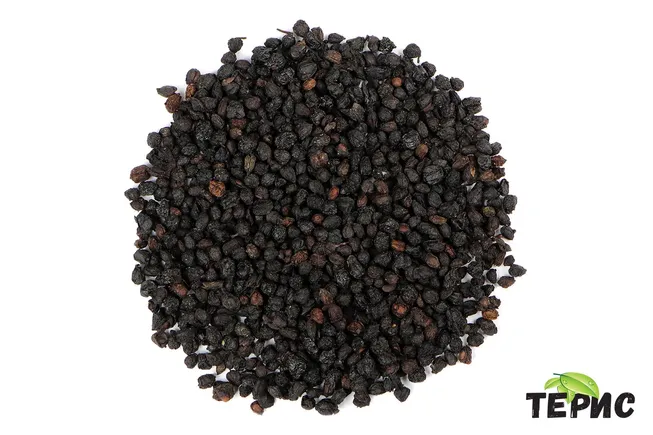
- Dried fruit
Another way to use dwarf elder is as dried fruit. In this case the fruits are spread out in a dry, warm place and dried for several days. They are taken as follows:
- Day one - 1 berry.
- Day two – 2 berries
- Day three – 3 berries.
In this way you build up to 21 berries at a time. If this dose is too strong for you, reduce the number to one at which you feel well.
- Leaf tea
Boil 6 to 8 finely chopped leaves in 300 millilitres of water. Drink it for colic, one cup three times a day before meals.
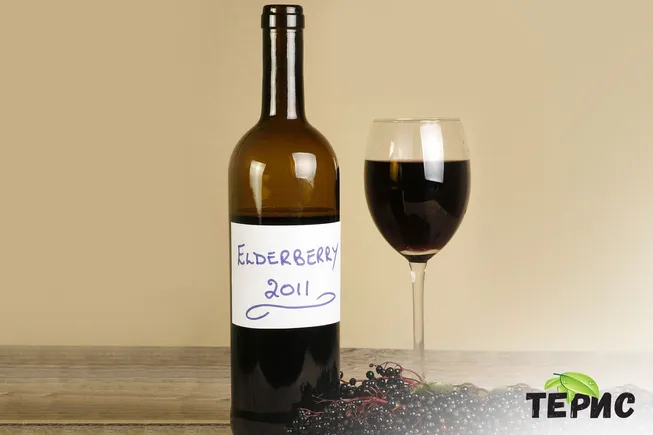
- Dwarf elder wine
To make wine, place 1 kg of uncleaned, well-ripened fruit in a glass jar. Sprinkle 1 kg of sugar on top, pour in 3 l of water and leave the jar at room temperature. After 15–20 days strain the juice and pour it into demijohns.
- Dwarf elder vinegar
To make vinegar, add 500 g of sugar and 3 l of water to the residue left after the first racking of the fruit for wine. Keep it in the sun in a covered jar for 15–20 days.
- For dyeing hair
The fruits of the herb are known to yield a blue dye and ink. Juice from the root is used to dye hair black.
The leaves of dwarf elder are used as a repellent against mice and moles.
- As a herbal extract - herbal tincture, herbal capsules
Taken this way, the herb is at its strongest and most concentrated!
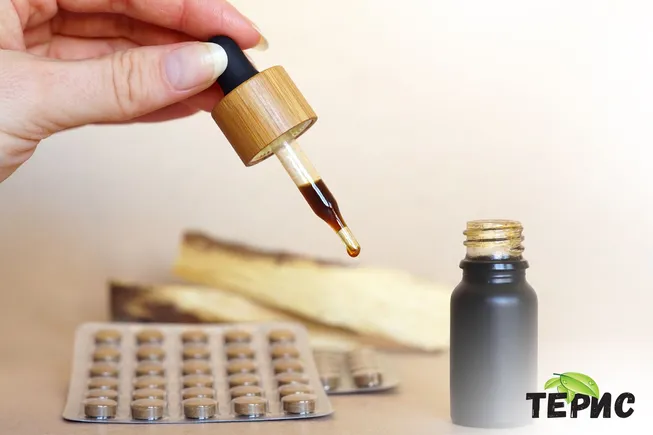
They are most often taken as a supplement to treat the symptoms of colds and flu.
One teaspoon of dwarf elder tincture can be taken once a day during the cold and flu season as a preventive measure, or 3–4 times a day once symptoms appear. You can use it to help keep the whole family (two adults, two young children) healthy.
If you are wondering what a tincture is, we will try to explain briefly:
The fruits of dwarf elder are used so that their phenolic compounds (the powerful healing properties inside the fruits) are released, and we leave them to steep in deionised water and alcohol for at least two weeks to increase the concentration.
Tinctures help you absorb concentrated herbal and plant properties faster than drinking tea allows, which is why you may see the effects of tinctures sooner!
Before you stock your cupboard with supplements claimed to be immune boosters that are of doubtful effectiveness and unnaturally produced, consider dwarf elder tincture, an entirely natural alternative with proven strength for colds and flu.
#Dwarf elder tincture
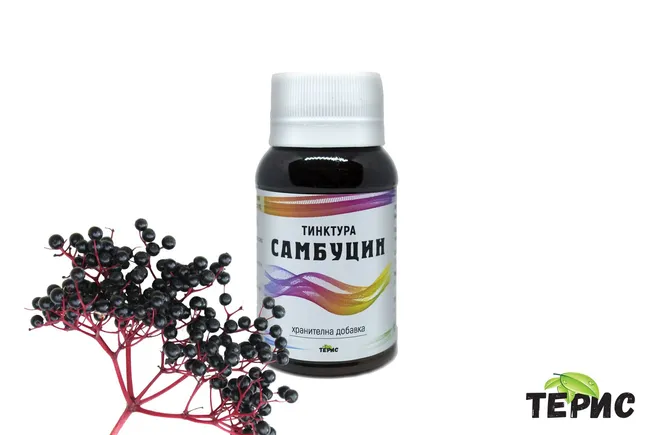
Dwarf elder - in the form of a tincture - is a strongly antiviral aid for stimulation in the treatment of degenerative diseases, for the prevention of cancer and for the control of benign tumours. Overall, it helps activate the immune system.
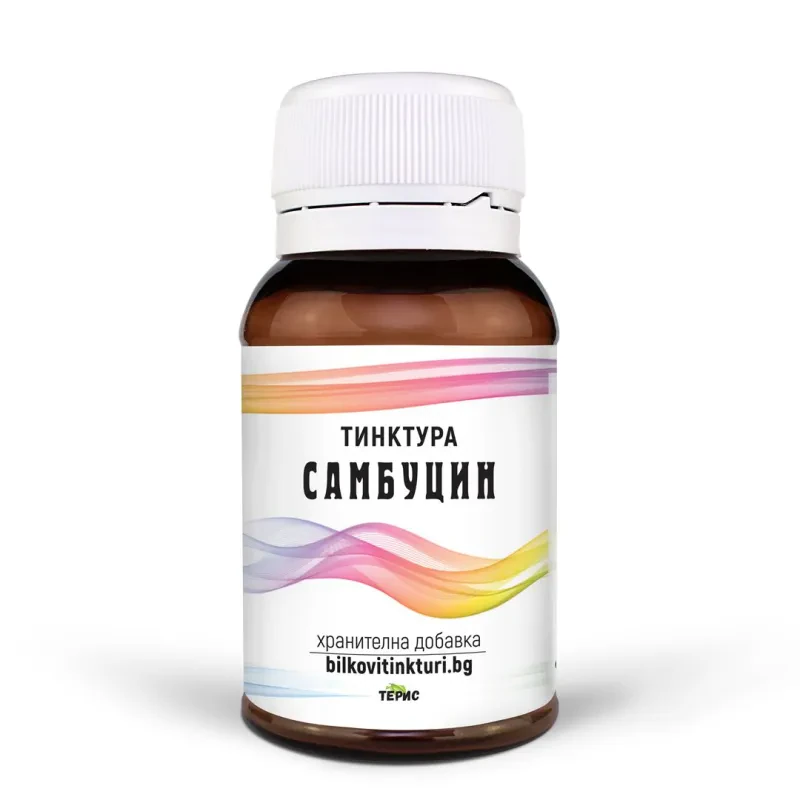
Our Herbal tincture Sambutsin stands out for its valuable qualities that favour the improvement of:
- the immune system,
- the kidneys,
- the bladder,
- blood pressure,
- bones and joints.
#Stimulate your immune system
Especially nowadays, a strong immune system is one of the most important things we need to have. Although dwarf elder is a powerful immunostimulant, it is not one of those plants that should be picked without the necessary experience and knowledge.
It is as useful as it is dangerous, so we should always be well informed and consult a specialist before taking advantage of its positive effects. This is another reason to trust a tested and proven source of extract from this powerful plant. Phytotherapy has a long history demonstrating its positive effects on health, which we should all certainly take advantage of.
Dwarf elder, with its countless qualities and benefits, can be used for the prevention and treatment of a large number of diseases. Stay healthy and take care of your health and your body.
#DWARF ELDER - THE BEST NATURAL IMMUNOSTIMULANT ➤ VIDEO
This article is for educational purposes and does not replace advice from a doctor. Food supplements are not medicines and are not intended to treat diseases. If you have a chronic condition, are pregnant or breastfeeding, or take medication, consult a specialist before use.

Dwarf Elder – the Traditional Herb for a Strong Body
Click to play video
Products from this article