Madder - the Red Dye That Benefits Health
Table of Contents
#Madder (Rubia)
Madder (Rubia) is a genus of flowering plants in the "Rubiaceae" (madder) family. It contains about 80 species of perennial climbing herbs and shrubs.
Among the best-known members of the genus are "Rubia tinctorum", "Rubia peregrina" and "Rubia cordifolia".
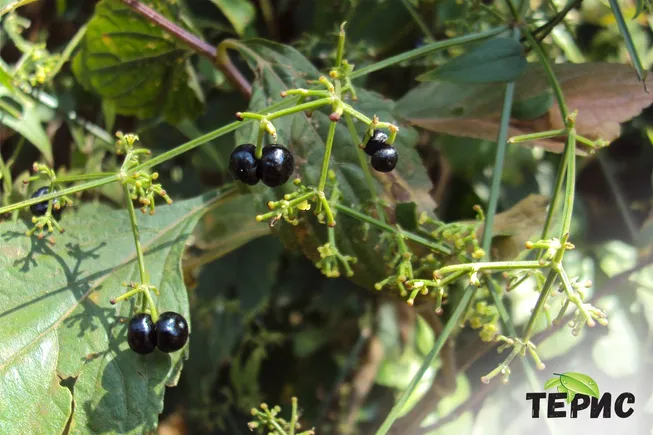
#History of the herb madder
It has been used since ancient times as a dye plant. Both the roots and the leaves give a red colour, but it was mainly the roots that were used to obtain the dye.
The plant contains two main colouring agents:
- purpurin, which gives a clear, warm red colour
- and alizarin, which gives a more yellowish red
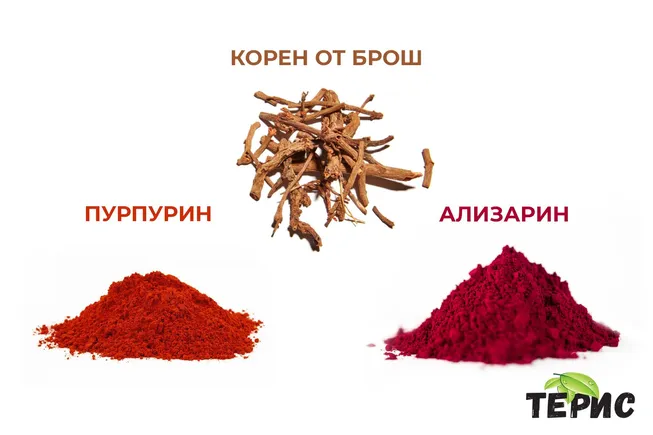
Several species, such as "Rubia tinctorum" in Europe, "Rubia cordifolia" in India and "Rubia argyi" in East Asia, were widely cultivated from antiquity until the middle of the 19th century for red dye.
Cloth dyed with it has even been found on Egyptian mummies.
"Rubia tinctorum" was widely cultivated in Southern Europe, in France, where it is called garance, and in the Netherlands, and to a small extent in the USA. Large quantities were imported into England from Smyrna, Trieste, Livorno and elsewhere. Cultivation declined, however, after the synthetic production of alizarin.
The herb was used medicinally in ancient civilisations and during the Middle Ages.
John Gerard wrote of it in 1597 that it was cultivated in many gardens in his day, and described its many supposed benefits.
It has been established that the most remarkable physiological effect of the plant is the red colouring of the bones of animals fed on it, as well as of the claws and beaks of birds. This is due to the chemical affinity of calcium phosphate for the colouring agent.
This property has been used to enable physiologists to establish how bones develop and how the various types of cells found in growing bone function.
The medicinal herb is mentioned more than a few times in ancient medical literature. Hippocrates (c. 460–377 BC) used the herb as an expectorant and against various gynaecological complaints.
In addition, it is listed as an astringent and diuretic and as a remedy for anaemia, a use that no doubt stems from the red colour of the plant.
Pliny (AD 23–79) used the "red plant" as a remedy for jaundice, and it is mentioned in the writings of the Schola Medica Salernitana, the world's first medical school.
But it is perhaps best known for its use in the form of a powder or extract to treat:
- kidney and urinary complaints,
and clinical studies have shown positive results regarding the herb's ability to
- dissolve stones in the kidneys and bladder
- it also has an antispasmodic action on the ureters
which helps the remnants of the stones pass more easily.
#Where is it found?
There are about 60 species, distributed mainly in the Mediterranean and South-East Asia. In Bulgaria only one of the species is found, called dyer's madder.
Madder is found in thickets and near yards and fences in Eastern and Southern Bulgaria.
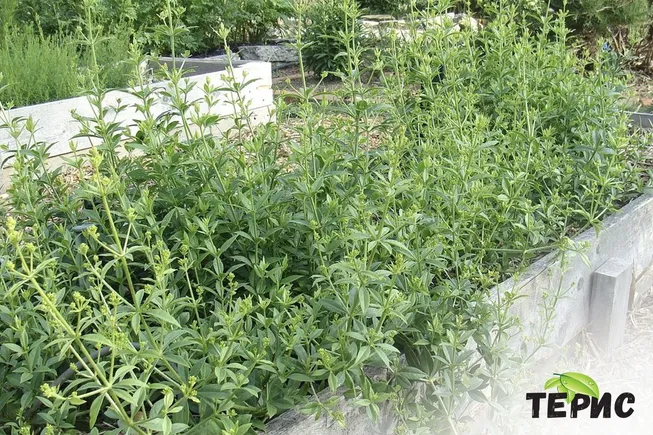
This species of madder is known for its medicinal uses in:
- colitis with diarrhoea;
- irregular menstruation;
- kidney stones;
- inflammation of the joints;
- inflammation of the renal pelvis;
- inflammation of the bladder;
#Botanical characteristics
The plant is perennial and grows up to 1.5 m tall. It thrives in clay soil and in sun or partial shade.
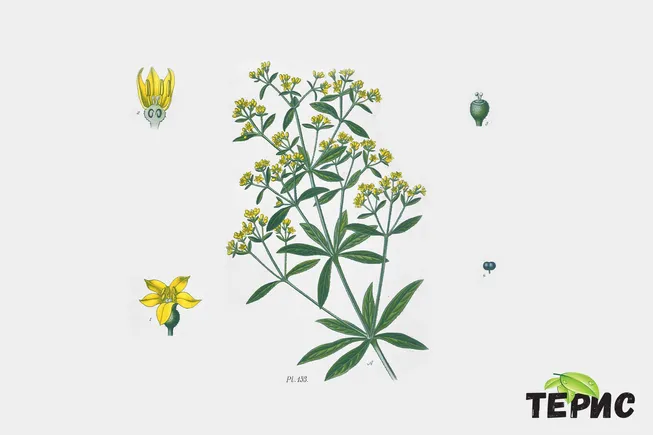
It has a long, cylindrical root, which can be more than a metre long and about 12 mm thick, branched and reddish-brown.
The stems are several in number, herbaceous, spreading, brittle, branched, four-angled and very rough, with sharp hooks.
The leaves number 4 to 6 and are oblong-lanceolate.
It has flowers that are small and yellow.
The fruits are two-coloured, globular, glossy and juicy.
Flowering takes place from June to August and is soon followed by round, reddish-purple fruits.
The roots are collected in autumn, after the above-ground parts begin to wither, from plants at least three years old, because older plants (3–4 years old) contain the most dye.
#Plant parts used.
The roots (rhizomes) and sometimes the leaves.
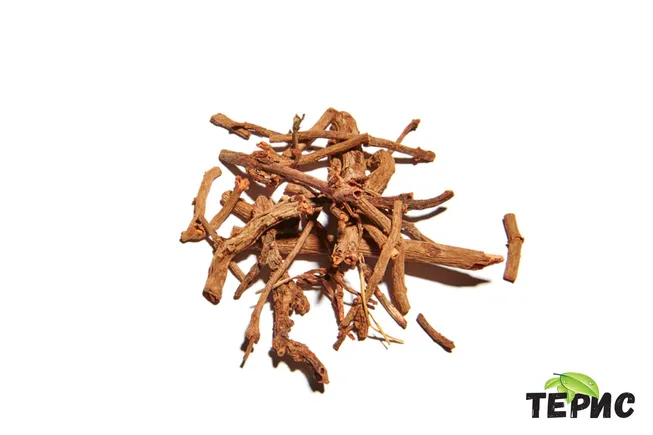
The cleaned and washed roots, which are dark red outside and bright red inside, are dried in the sun, in the shade or in a dryer at temperatures up to 40 degrees.
#Household use
For many centuries this plant was an economically important source of red pigment in many regions of Asia, Europe and Africa. Even the name of the genus
"Rubia" comes from the Latin ruber, which means "red".
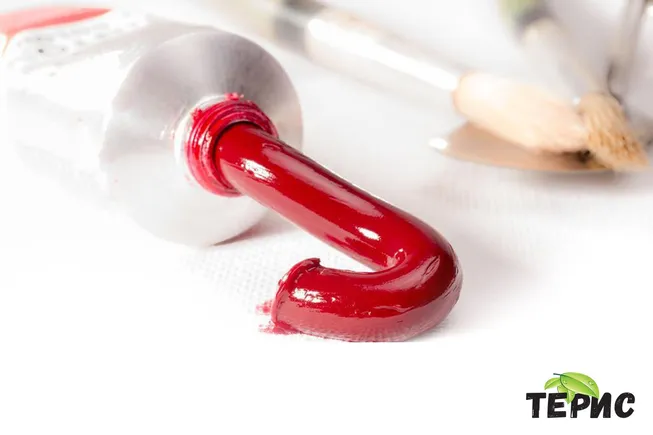
The roots of the plant contain an anthracene compound called alizarin, which gives the red colour to a textile dye known as rose madder. It was also used as a colourant, especially for the paint called "madder lake". The synthesis of alizarin greatly reduced demand for the natural compound.
#Constituents of madder
The main substances found in the root are anthraquinone glycosides (ruberythric acid, which breaks down into alizarin, lucidin, pseudopurpurin, xanthopurpurin, purpurin and rubiadin).
The root also contains an iridoid (asperuloside), organic acids, tannins, calcium, pectin and sugars.
The medicinal properties of the plant are due mainly to the glycosides.
#Health benefits of madder
Here are some of the health benefits a person can gain by making use of the healing properties of this curious herb:
#It has anti-inflammatory properties
Madder is a powerful anti-inflammatory agent that is effective in treating inflammatory conditions associated with arthritis or other forms of joint pain, swelling, redness and pain in general. We all know how important it is to stop inflammation, because it usually signals the early stage of most diseases. So if inflammation is not stopped early, the chance of a person becoming ill is really very high.
#It helps with urinary tract inflammation
"In fact, the herb as a whole is effective for treating bladder conditions."
#It helps with kidney stones
The plant helps a person cope with urolithiasis, also known as kidney stones.
Madder contains a large amount of ruberythric acid, which helps reduce magnesium and calcium, as well as the formation of bladder stones, in the long term.
In addition, it has a remarkable antispasmodic agent that speeds up the easy passage of kidney stones through the excretory system.
#It helps with irregular, late menstruation
In homeopathy, a tincture made from fresh roots is used for delayed or missed menstrual periods, disorders of the spleen and various other conditions.
#For digestive problems
#It stops diarrhoea
According to research, if we add madder to our food, we usually recover from diarrhoea faster.
#It stops bleeding
Madder is also known for stopping bleeding, whether internal or external. In the case of internal bleeding such as nosebleeds, the root can be of great help. Also, with regard to external bleeding, the herb can treat serious skin wounds by making them heal quickly.
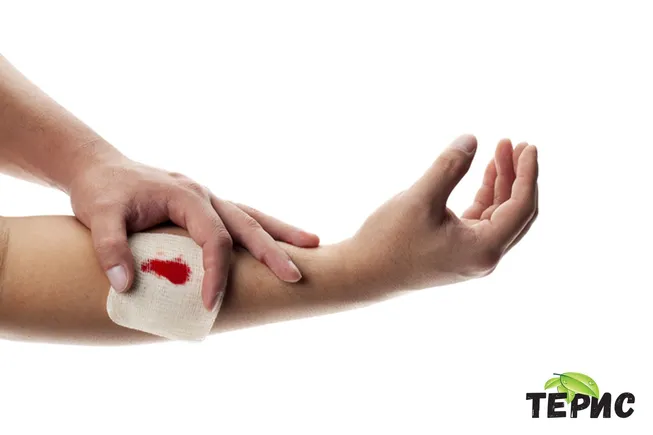
"For centuries the root has been used to stop internal bleeding and nosebleeds."
#Immunomodulator
An immunomodulator is a chemical agent that modifies and regulates the response or activity of the immune system. Immunomodulators such as Rubia are effective in preventing autoimmune diseases and inflammation.
#It treats jaundice
The root of the plant has the ability to treat jaundice.
"Jaundice means an excess of bilirubin in the blood"
and leads to a yellow discolouration of the mucous membranes, the skin and the whites of the eyes.
Symptoms experienced by people with jaundice include dark urine, pale stools, mild rashes, and yellowing of the whites of the eyes, the skin and the mucous membranes. Jaundice can occur mainly because of liver-related conditions such as cirrhosis, hepatitis, thalassaemia and malaria.
#It helps stop coughing
This remarkable plant helps stop coughing because it is a natural expectorant that acts very quickly after being taken. An expectorant helps encourage the clearing of phlegm from the airways.

#As a topical treatment
- For healthy skin
Rubia is considered a very effective choice for treating acne, skin rashes, boils, sciatica, skin irritations and other skin conditions.
It can be applied topically to the affected area when a paste is made from the herb.
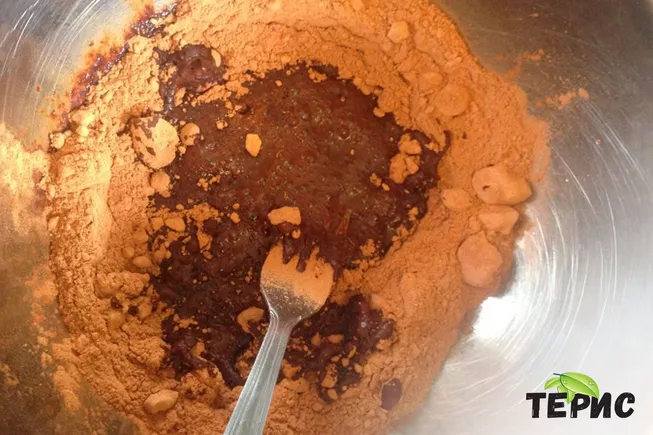
To make the paste more effective, mix about 100 grams of powdered herb with 50 grams of sandalwood, turmeric and orange peel. Apply the paste to the skin and leave it to dry before washing it off.
#It increases white blood cell counts
Rubia increases the number of white blood cells, or leucocytes, in the blood. It also helps treat leucopenia - a shortage of white blood cells in the bloodstream, which puts people at risk of many infections.
#Dosage
The appropriate dose of madder depends on certain factors such as the user's health, age and several other conditions.
It is generally taken internally in the form of tinctures, powders, capsules or pills, 3–4 times a day, or 20 drops 3 times a day, possibly more of the liquid extract.

Nevertheless, care should be taken with all plant products and dosages. They can be of considerable importance.
*We should always consult a specialist, health consultant, phytotherapist or pharmacist before use.
#Precautions
It is advisable for pregnant women, breastfeeding mothers and young children to avoid using madder. The herb is probably unsafe when taken by mouth, as the chemicals it contains may have some negative effects.
There are also concerns that the herb may turn body fluids red, including urine, saliva, tears, sweat or even breast milk. That is why the plant should only be used under the supervision of a specialist.
It colours urine red! If the colouring is sudden and strong, reduce the dose or stop taking it.
All the same, one really must approach any type of herb very, very carefully. This is because, even if they are harmless in themselves or even very good for health, there is a risk that they may in some way interact negatively with certain chronic diseases and with medicines being taken at the time.
#Some curious facts
· The roots of the plant, as already mentioned, yield a very high-quality red dye.
· The roots can be dried for later use.
· The dye can also be extracted from the leaves.
· Besides its industrial use, this dye is also used for medicinal purposes.
· The leaves and stem are prickly; the leaf margins have prickles along the midrib on the underside.
· The plant is known to be effective for amenorrhoea, dropsy and jaundice.
· People take the herb by mouth to treat menstrual disorders, jaundice, blood disorders, wounds, paralysis, disorders of the spleen, urinary tract infections and sciatica, and to prevent and dissolve kidney stones.
· Hippocrates used the herb as an expectorant and against various gynaecological complaints.
· The plant is perhaps best known for its use in the form of a powder or extract to treat kidney and bladder conditions.
· Herbal tea made from the leaves and stems is used to treat constipation.
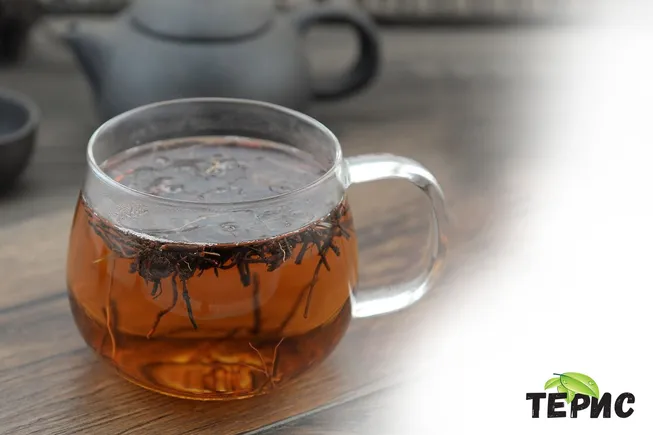
· A tincture prepared from fresh roots is used for delayed or missed menstrual periods, disorders of the spleen and various other conditions.
· Herbalists boiled the herb in wine and added sugar or honey for flavour, then gave it to their patients.
· To treat swelling of the spleen, the herb is drunk together with honey and vinegar.
· The leaves and roots of the plant are crushed and applied to freckles and skin blemishes to cure these conditions.
· This property allows them to be used for polishing metal structures.
· The herb is used as animal fodder.
· People in France used the residue of the plant to make spirits.
· Some reports state that 2-year-old roots are used in spring and autumn, while others say that 3-year-old roots of the plant are used.
Their medicinal properties in:
- colitis with diarrhoea;
- irregular menstruation;
- kidney stones;
- inflammation of the joints;
- inflammation of the renal pelvis;
- inflammation of the bladder;
#The red medicinal herb
Excitingly, this herb is clearly known all over the world. And no wonder, since it offers such a long list of remarkable health benefits for people with all kinds of problems!
Moreover, madder is very interesting for its other properties too. It is no accident that it is so popular and widespread – especially because of its bright dye.
After all, is there anyone who isn't crazy about the colour red?
When taken sensibly in terms of dosage and monitored by a health consultant, madder is a wonderful addition to one's daily routine, especially in such difficult times, when almost everyone complains of some aches and chronic conditions. Health always has been, is and always will be a priority. Who could argue with that?
#MADDER - THE RED DYE THAT BENEFITS HEALTH ➤ VIDEO
This article is for educational purposes and does not replace advice from a doctor. Food supplements are not medicines and are not intended to treat diseases. If you have a chronic condition, are pregnant or breastfeeding, or take medication, consult a specialist before use.

Madder - the Red Dye That Benefits Health
Click to play video